Midday · The forest
The Retired Elephants of Angkor
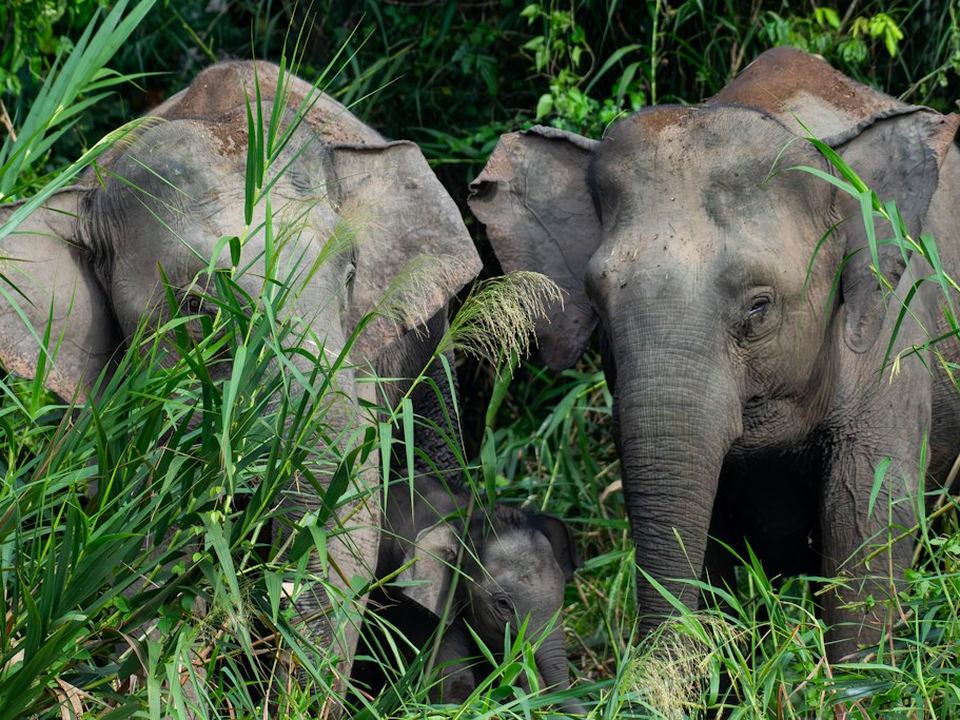
At noon, the Kingdom’s oldest souls take to the shade.
- Siem Reap
- Half or full day
- Responsible
Before the world wakes, the Kingdom belongs to you.
The experience
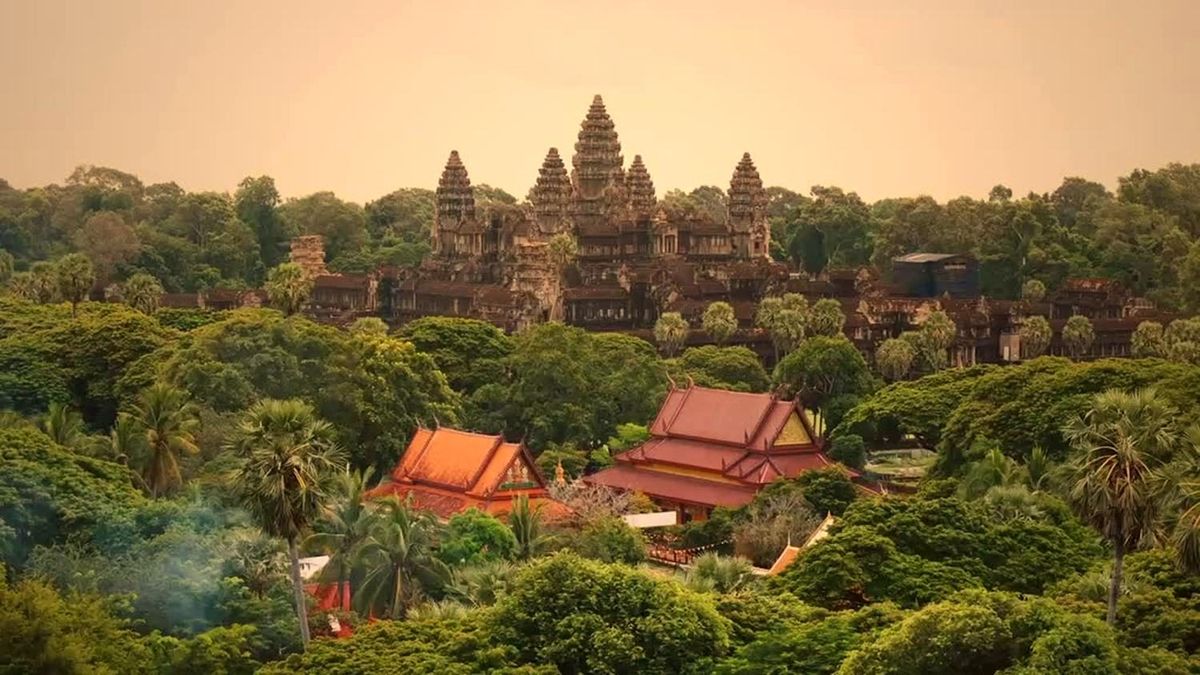
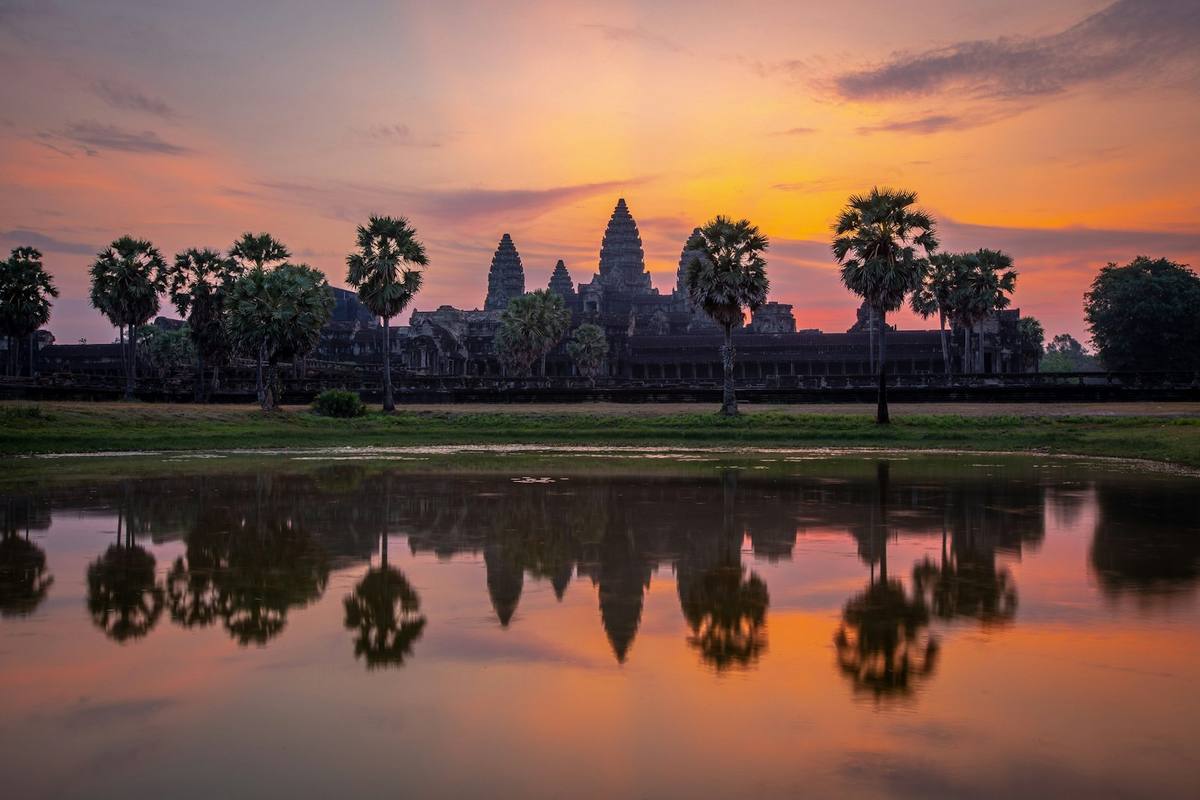
A pre-dawn collection from your hotel, a private guide, and the sun climbing behind the five towers of Angkor Wat. Then into the temples in the quiet first hours, ahead of the day’s crowds. The single most iconic morning in Southeast Asia, kept intimate.
In pictures
Photos: 1 Sebastian Latorre, Unsplash · 2 Vldimir Pankratov, CC BY-SA 4.0 · 3 Marcin Konsek, CC BY-SA 4.0 · 4 Vince Gx, Unsplash · 5 Kitty A, Unsplash · 6 allPhoto Bangkok, Unsplash · 7 LBM1948, CC BY-SA 4.0 · 8 Mario La Pergola, Unsplash
The story
Angkor Wat was built in the first half of the 12th century by King Suryavarman II as his state temple, dedicated to Vishnu. Guinness counts it as the largest religious structure ever built: 162.6 hectares inside a moat about five kilometres around and nearly two hundred metres wide, standing for the oceans at the edge of the world.
It also faces west, which almost no other Khmer temple does. Scholars still argue over why. Vishnu was linked with the west, and some read the temple as a funerary monument. What it means for you is simple: from the western approach, the sun comes up behind the towers. At the March and September equinoxes it rises directly over the central tower.
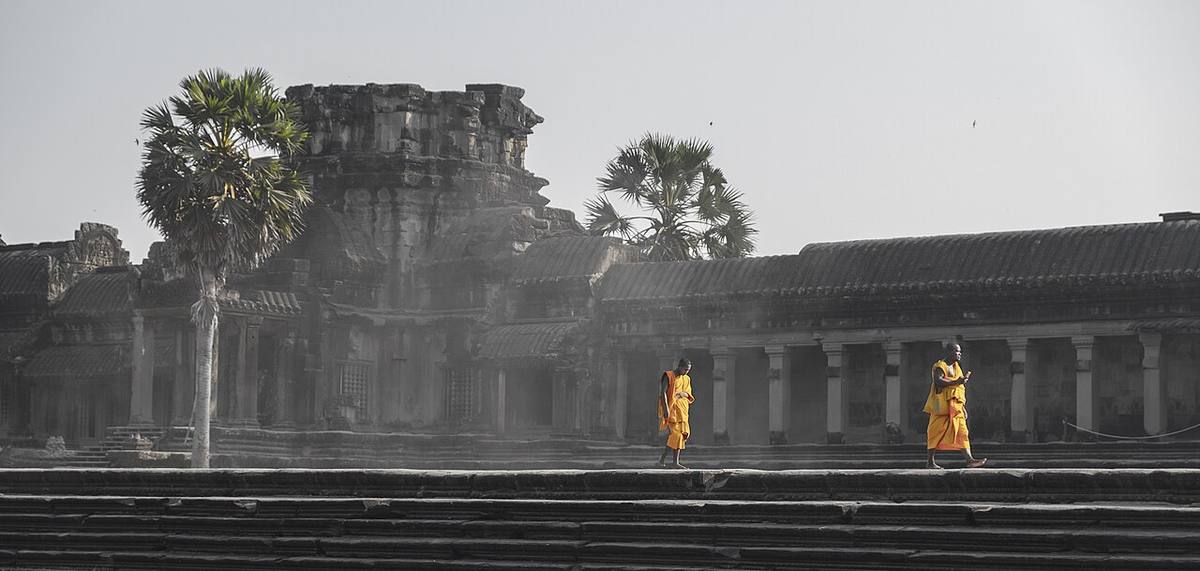
By the 14th century Angkor Wat had become Buddhist, and it has never stopped being a place of worship. Going at first light isn’t only about the sky. The bas-reliefs, Ta Prohm and the Bayon are at their quietest in the early hours, and that is when we take you in.
Itinerary
Your guide meets you at your hotel in Siem Reap while it is still dark. Sunrise at Angkor moves by about an hour through the year, so we set your pick-up to your date rather than to a timetable.
Take your place on the western approach as the sky turns from indigo to gold. The five towers, shaped like lotus buds, come out of the dark one by one, and in the wetter months they double in the reflecting pool in front of you.
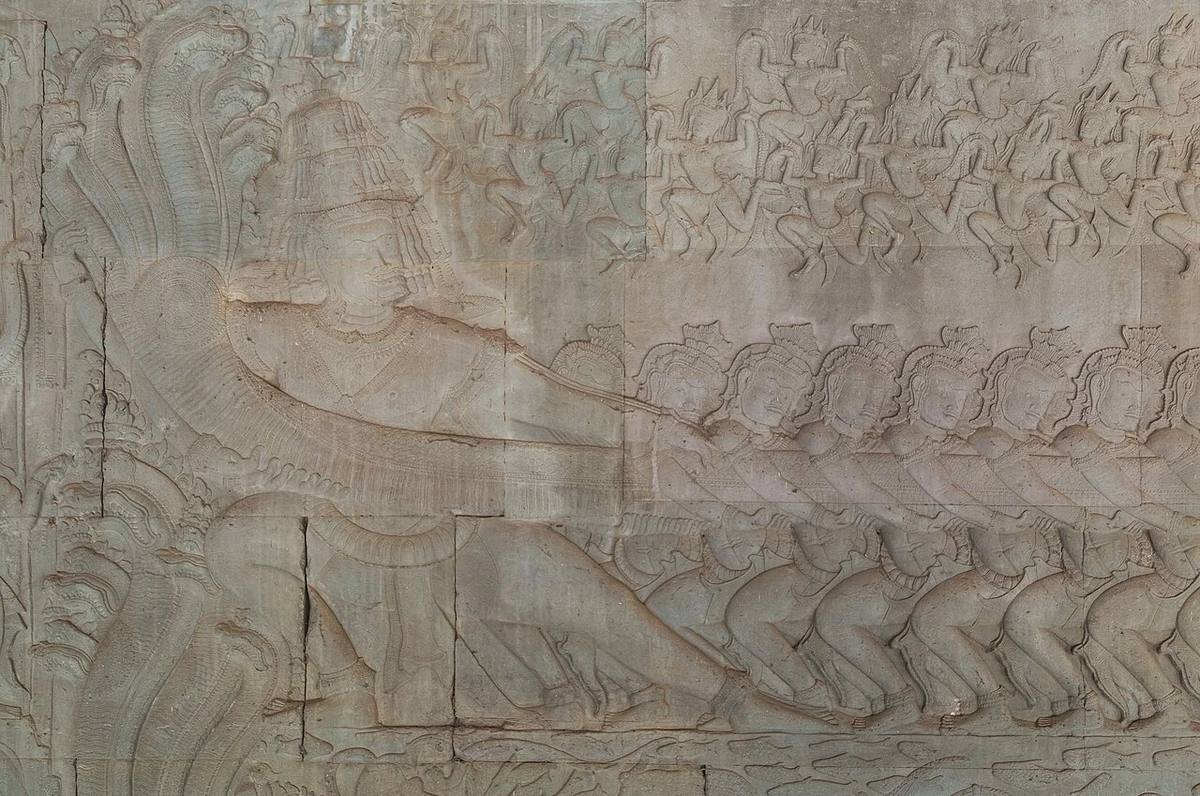
Walk in while the temple is still quiet. Your guide reads the bas-reliefs with you scene by scene: the Churning of the Ocean of Milk on the east side, where 92 demons and 88 gods haul on a serpent to stir up the elixir of immortality; the battle of Kurukshetra on the west; Suryavarman II’s own procession; and heaven and hell.
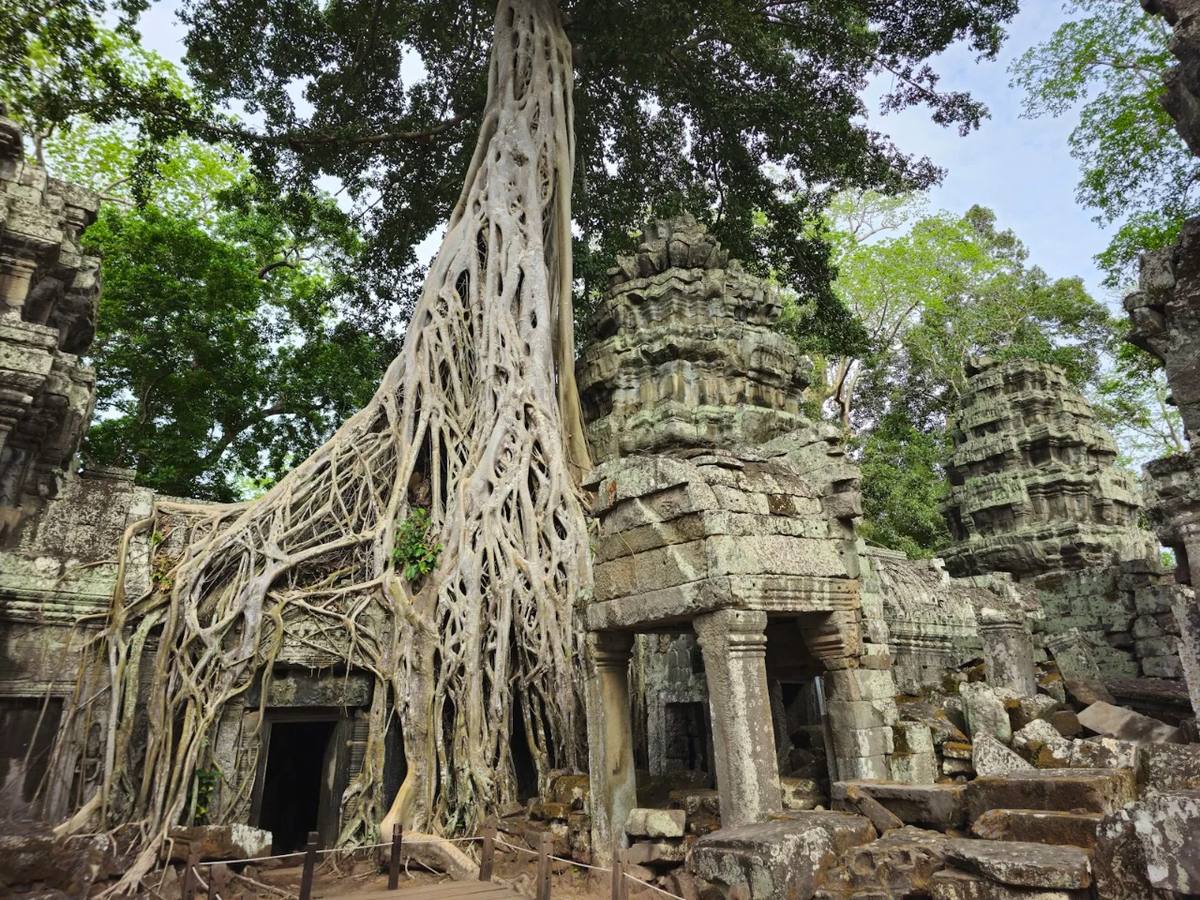
Jayavarman VII dedicated Ta Prohm in 1186 as a royal monastery, honouring his mother. When French archaeologists cleared Angkor last century, they left this temple much as they found it, with giant spung trees and strangler figs rooted through its walls. Indian conservators have worked since 2003 to hold it together without removing the trees.
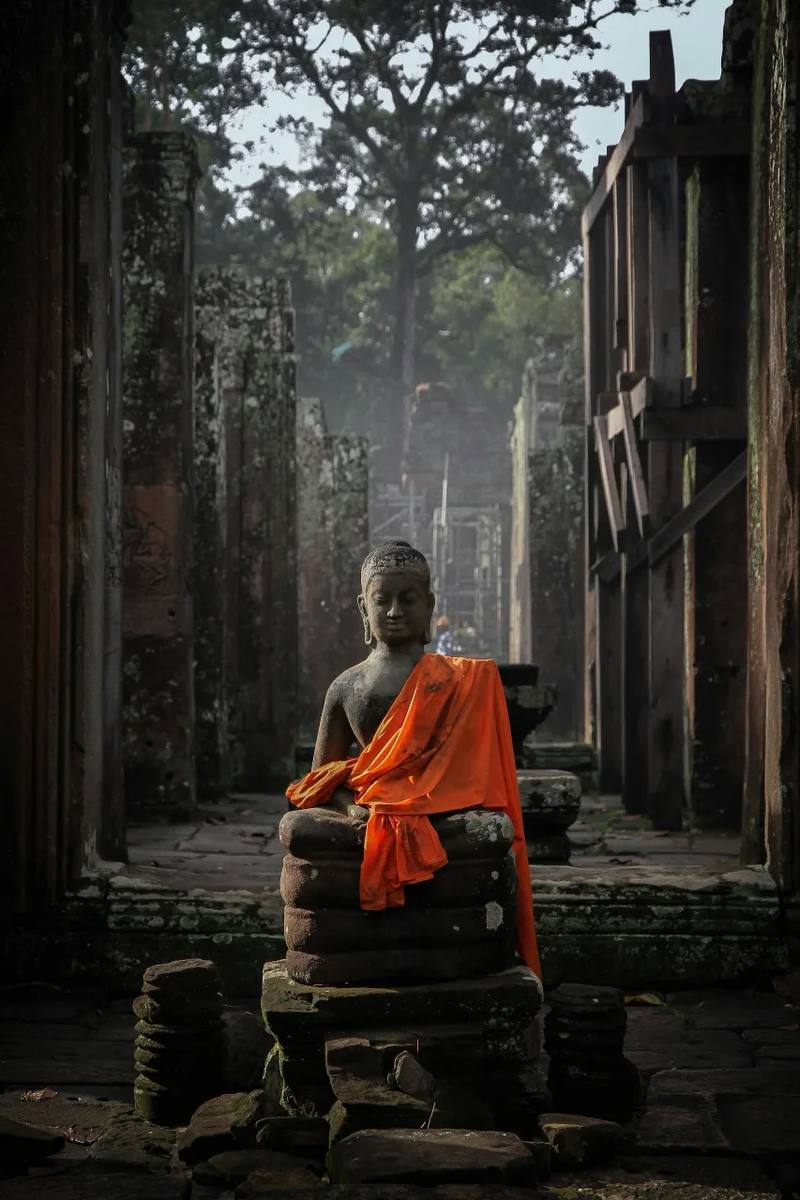
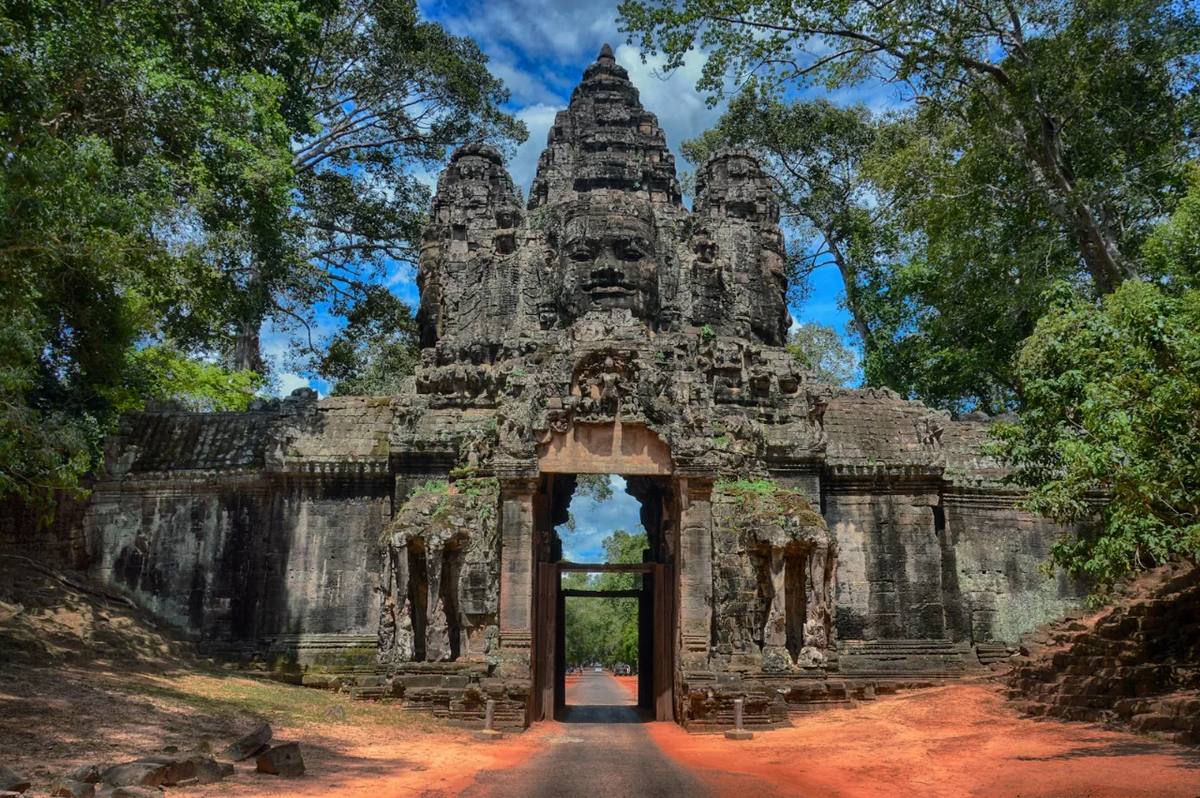
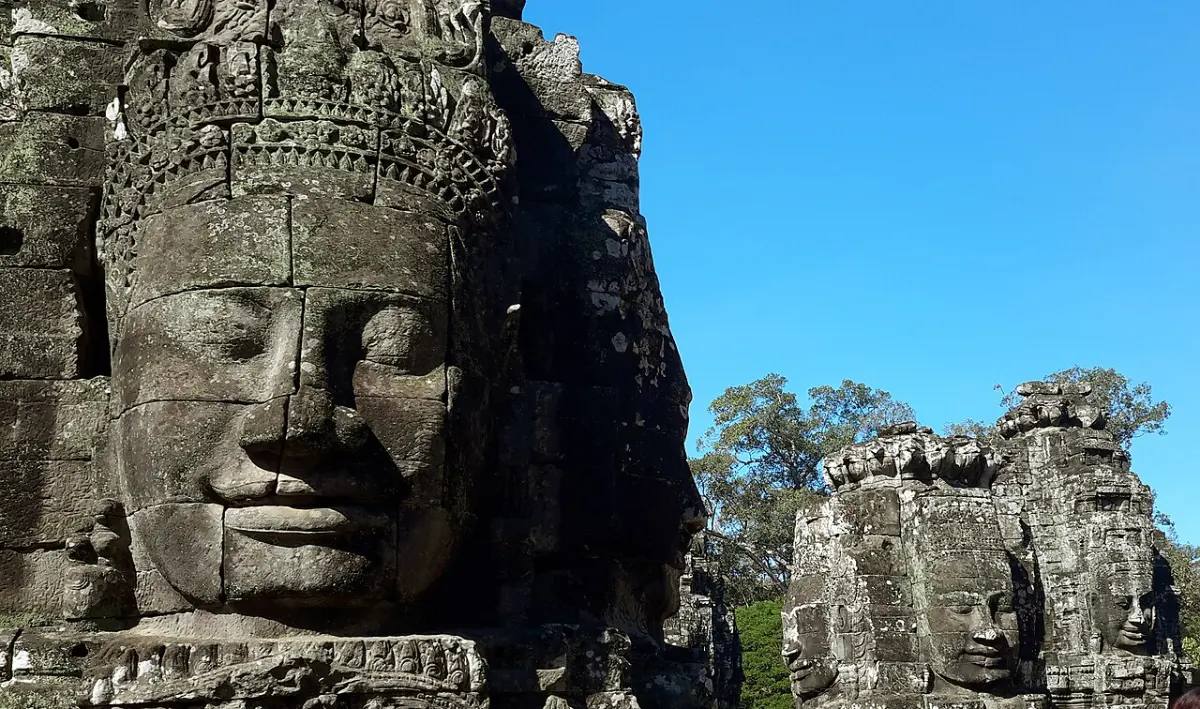
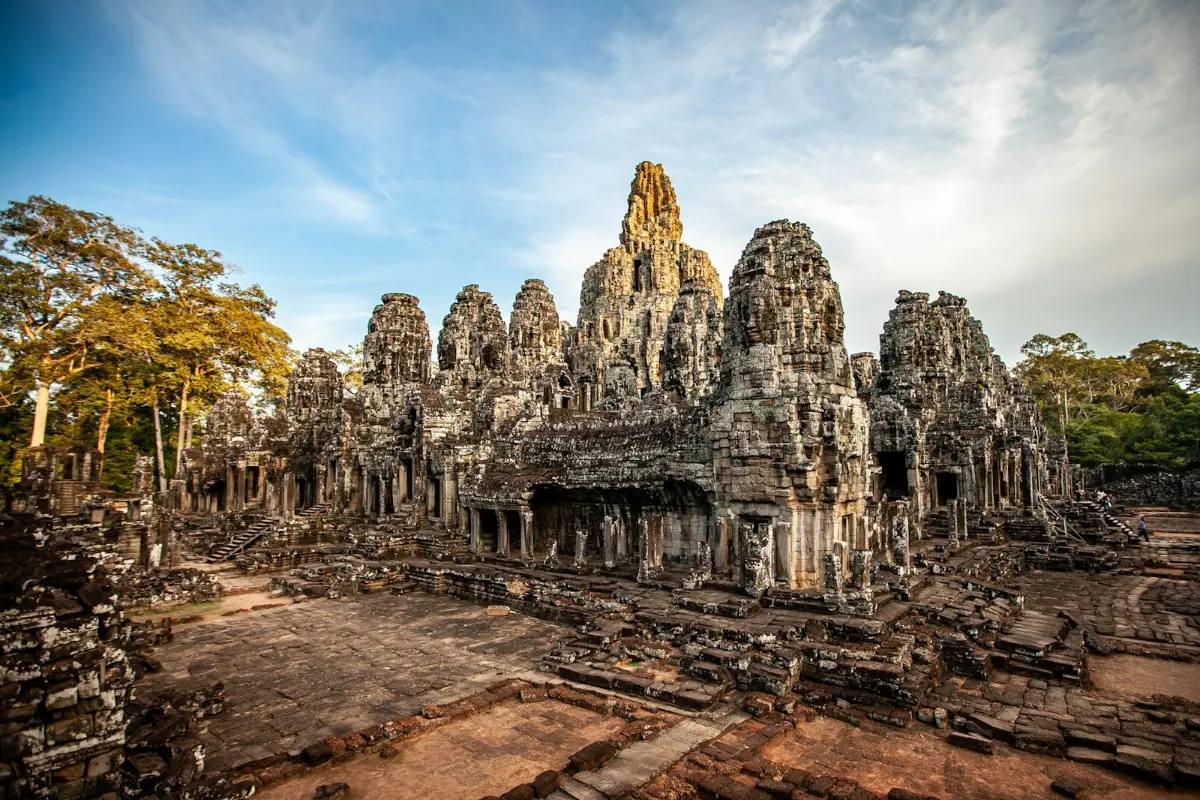
At the centre of Angkor Thom, Jayavarman VII’s Bayon rises in towers of calm stone faces. Some two hundred were carved around 1200 and 173 survive. Tradition reads them as Avalokiteshvara, the bodhisattva of compassion, perhaps with the king’s own features.
Your guide drives you back to your hotel before the heat of the day, with the afternoon yours.
Plan your trip
Before you go
Sunrise at Angkor Wat is popular, and you won’t have the causeway to yourself. The privacy is in everything around it: your own guide, your own pace, and the galleries, Ta Prohm and the Bayon in the quiet first hours, before most visitors reach them.
It depends on your date. Sunrise at Angkor runs from about 5:30 in June to after 6:30 in late January, so we confirm your pick-up when we arrange the morning.
Yes. Every visitor needs one, and passes are checked at temple entrances. They are sold only through Angkor Enterprise: at the official ticket office, on its website or in its app.
At the March and September equinoxes it comes up directly over the central tower. On other days it rises a little to one side, and the towers still stand in silhouette against it.
Much of the morning is on foot over old stone, with steep steps in places. Tell us who is travelling and we will pace the morning around them.
Yes. It pairs well with an afternoon with the HeroRATs in Siem Reap, or a day with the retired elephants beneath Kulen Mountain.
Arranged around you
Every One Journey experience in Cambodia is private. Tell us your dates and who is travelling, and we will arrange it around you.
or write to [email protected]
Or make it part of the whole journey: A Tale of Two Cities with Raffles
More of the Kingdom’s day
Midday · The forest
At noon, the Kingdom’s oldest souls take to the shade.
Afternoon · The heroes
In the heat of the afternoon, the Kingdom’s smallest heroes are hard at work.
Morning · The capital
The morning belongs to the boulevards.