Le Marais: Paris's Most Layered Neighborhood Guide
Le Marais resists easy summary. It is at once medieval and contemporary, working-class in memory and upscale in practice, architecturally frozen in the 17th century and culturally restless in the present. It contains Paris's oldest covered market, its most elegant royal square, one of Europe's most significant Jewish heritage districts, and some of the city's most visited art museums - all within walking distance of each other on streets that refuse to run in straight lines.
That density is precisely what makes Le Marais one of the most rewarding neighborhoods in Paris for visitors who want more than monument-checking. This guide covers its history, its essential sites, and how to structure your time there well.
Why Le Marais Is Different from the Rest of Paris
Much of central Paris was reconstructed under Baron Haussmann in the 1850s and 1860s, when vast swaths of medieval city were cleared to make way for the wide boulevards and uniform stone facades that now define much of the city's identity. Le Marais was largely spared. Its narrow streets, its irregular medieval plot lines, and its concentration of pre-Haussmann hôtels particuliers (aristocratic private mansions) survived in large part because the neighborhood had already been somewhat unfashionable by the time the renovations swept through.
"Le Marais is a neighborhood that time forgot to demolish. That accident of neglect is what makes it irreplaceable."
The name itself - le marais means "the swamp" - reflects the neighborhood's origins as marshland on the Right Bank of the Seine, drained and developed from the 12th century onward. By the 17th century, it had become the most fashionable address in Paris for the nobility. Then Versailles drew the court westward, and Le Marais entered a long decline that ultimately preserved it.
Place des Vosges: Where to Begin
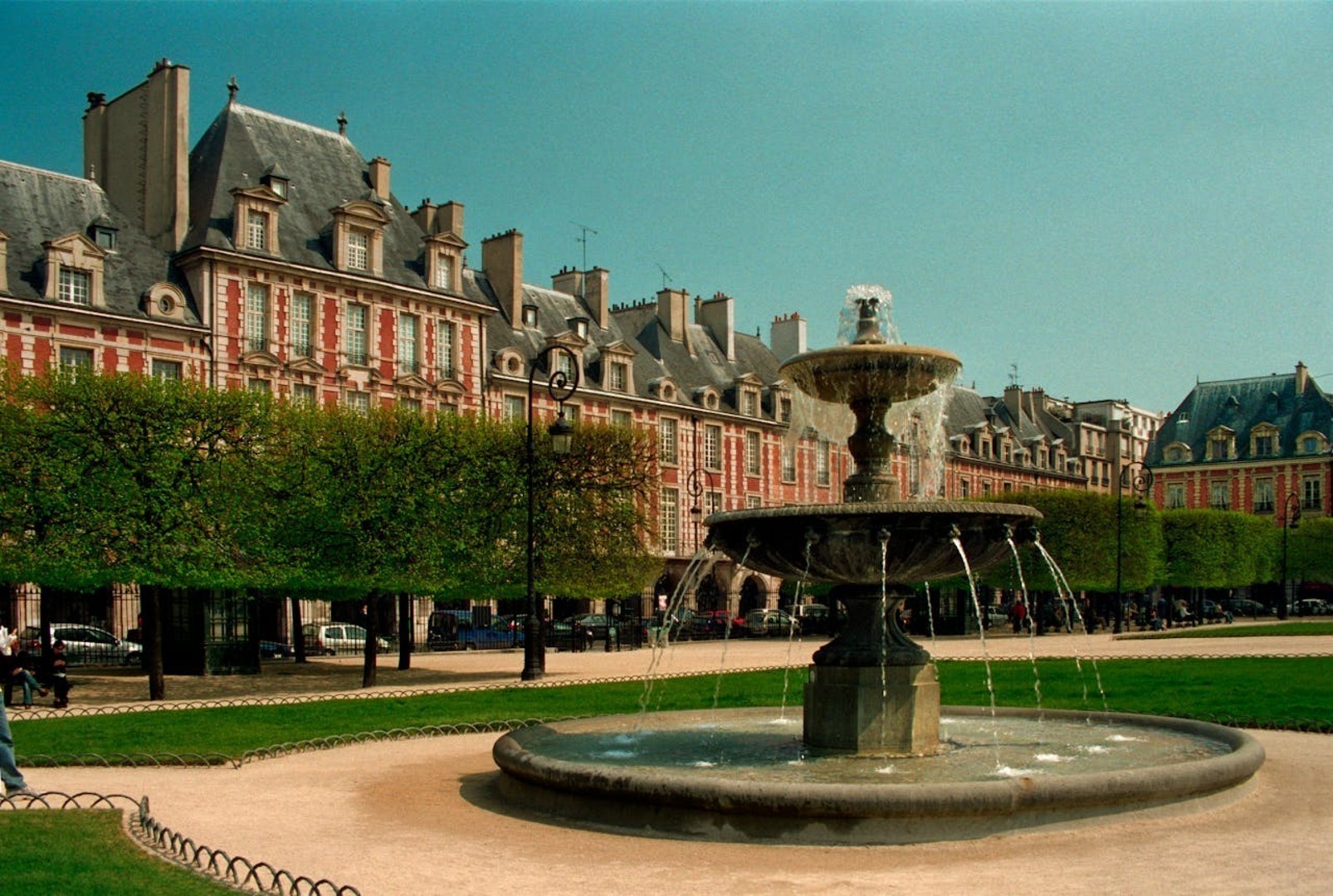
The natural starting point for any Le Marais visit is Place des Vosges, the oldest planned square in Paris. Completed in 1612 under Henri IV, it is a perfectly symmetrical arcade of 36 pavilions in red brick and pale stone, enclosing a garden square with fountains at its center. It is simultaneously one of the most photographed spots in the city and, at certain hours, one of the quietest.
The arcaded ground floor now houses galleries, restaurants, and boutiques. Victor Hugo lived at number 6 from 1832 to 1848 - his apartment is now the free-to-enter Maison de Victor Hugo, a museum worth 45 minutes of your time.
Key Sites in Le Marais
Essential stops in Le Marais:
- Musée Picasso Paris: Housed in a restored 17th-century hôtel particulier, the museum holds one of the world's most important collections of Picasso's work - paintings, sculptures, drawings, and ceramics. The building itself is worth visiting for its architecture. Booking in advance is advisable.
- Musée Carnavalet: The dedicated museum of Parisian history, also housed in two connected historic mansions. Permanently free admission for the permanent collection. Covers Paris from prehistoric times to the 20th century through objects, paintings, and reconstructed interiors.
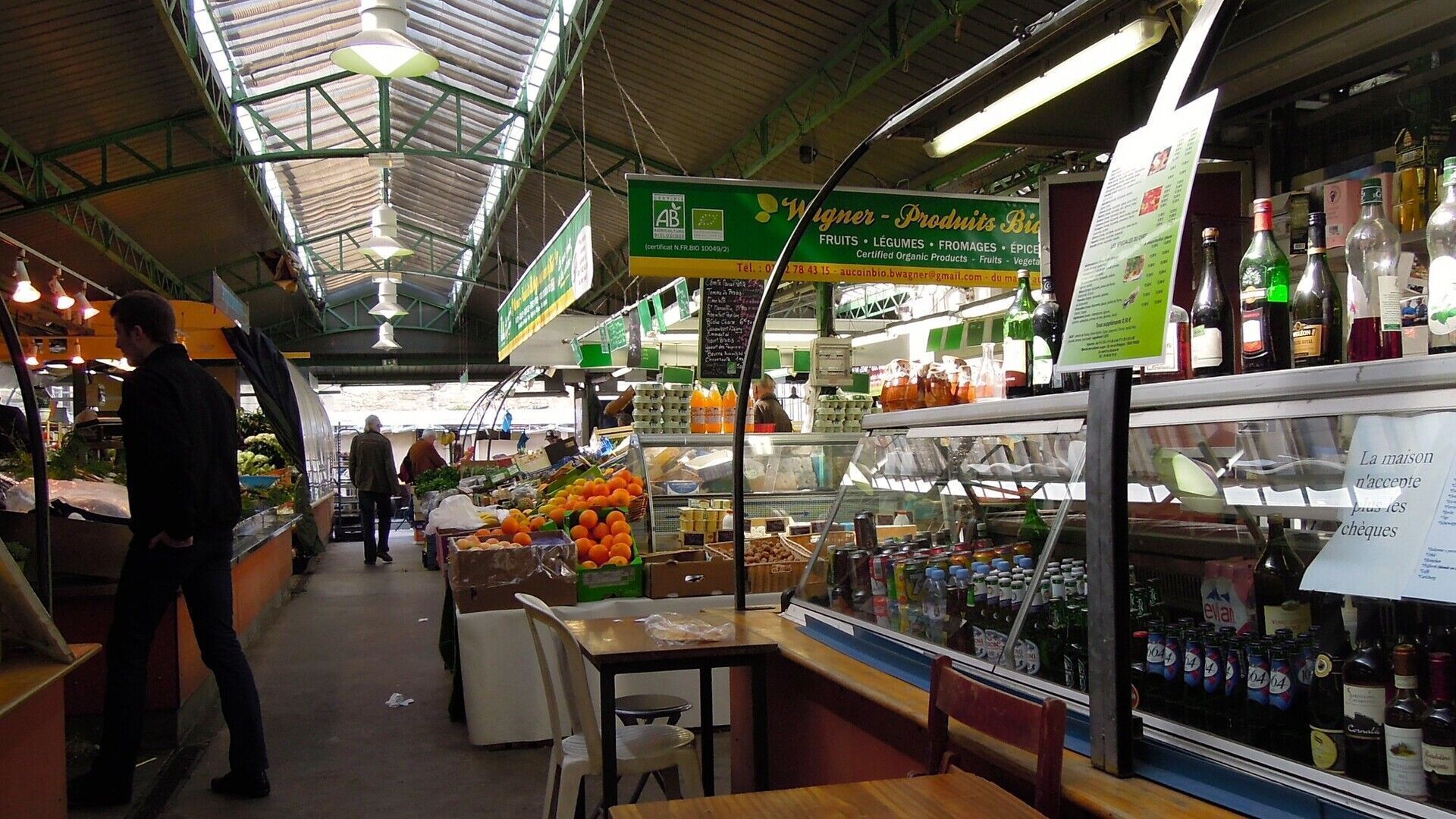
- Marché des Enfants Rouges: Paris's oldest covered market, dating to 1615, tucked behind a nondescript door on Rue de Bretagne. It functions today as a food hall with a dozen or so vendors selling Moroccan couscous, Japanese bento, Lebanese mezze, and French rotisserie. One of the most atmospheric lunch spots in the city.
- Centre Pompidou: Technically on Le Marais's western edge (4th arrondissement), the inside-out Pompidou is one of Paris's most visited museums and its most architecturally polarizing landmark. The plaza outside is always lively.
- Rue des Rosiers: The historic heart of the Pletzl - the Jewish Quarter. A short street lined with Jewish bakeries, falafel counters, bookshops, and synagogues. L'As du Fallafel at number 34 is a Parisian institution and almost always has a queue worth joining.
The Jewish Quarter: Rue des Rosiers and Around
The area around Rue des Rosiers has served as the center of Paris's Jewish community since the 13th century, when Jews expelled from England and later from France itself periodically found refuge here. Through expulsions, the Revolution, and the devastating deportations of the Second World War, the community maintained a presence. Today the quarter is a layered mix of working kosher restaurants, historic synagogues (including one designed by Hector Guimard), memorial plaques, and the rapid gentrification that has reshaped much of Le Marais in recent decades.
The Mémorial de la Shoah on Rue Geoffroy-l'Asnier is the most significant Holocaust memorial in France and one of the most moving in Europe. Entry is free and open most days.
Shopping, Food, and the Contemporary Le Marais
Le Marais has evolved steadily since the 1990s into one of Paris's prime addresses for independent concept stores, art galleries, and food businesses. The area around Rue Vieille du Temple, Rue Charlot, and the streets north of Place des Vosges has a concentration of independent shops that ranges from serious art bookshops to ceramics studios to luxury menswear with distinctive design sensibilities.
For food beyond the market and falafel, the neighborhood has a high density of restaurants on Rue de Bretagne, Rue Charlot, and the quieter streets behind the Musée Picasso. Most of these work best as lunch or early dinner destinations, when the neighborhood's daytime character is at its fullest.
Le Marais in a Paris Itinerary
Le Marais works well as a half-day or full-day focus. A half-day covers Place des Vosges, a single museum (Picasso or Carnavalet), a walk through Rue des Rosiers, and lunch at the Marché des Enfants Rouges. A full day adds the Mémorial de la Shoah, a deeper wander through the shopping streets, the Centre Pompidou plaza, and a return to Place des Vosges at dusk when the light through the arches is at its best.
Le Marais sits between the 3rd and 4th arrondissements, immediately east of the Centre Pompidou and north of the Seine's Île Saint-Louis. It connects naturally to Notre-Dame via the river, and to the city's historic Right Bank on foot. The Original Paris Walking Tour covers the historic core including the Seine-side quarters that frame Le Marais on its southern edge.
For those interested in Paris through the lens of cinema, art, and cultural history, the Guided Tour with Cinema Magic traces locations across the Right Bank that include corners of Le Marais featured in some of the most celebrated films set in Paris.
Practical Tips for Le Marais
- Start at Place des Vosges in the morning: The square is quietest before 10am and again in the early evening. Midday brings the most visitors.
- Book Musée Picasso in advance: Particularly on weekends and public holidays. Timed entry is available online and strongly recommended in spring and summer.
- Go to Marché des Enfants Rouges for lunch: The market opens around 9am but the food stalls are at their best from 12pm to 2pm. Arrive early to find a seat at the communal tables.
- Walk - don't metro - within the neighborhood: Le Marais's density means most sites are 5 - 10 minutes apart on foot. The streets between them are worth the walk.
- Note Sunday opening patterns: Many shops in the Jewish Quarter and on the main Le Marais streets are closed on Saturday (Shabbat) but open on Sunday - the opposite of the rest of Paris.
- Return at dusk: Place des Vosges and the quiet lanes around Rue des Francs Bourgeois have a different quality in the last hour of daylight, when the tourist energy subsides and the neighborhood reclaims its own pace.
For guided walking experiences in Le Marais and the wider historic Paris, contact our Tour Concierge at [email protected].