Beyond Angkor Wat: Bayon, Ta Prohm & the Temple Circuit of Siem Reap
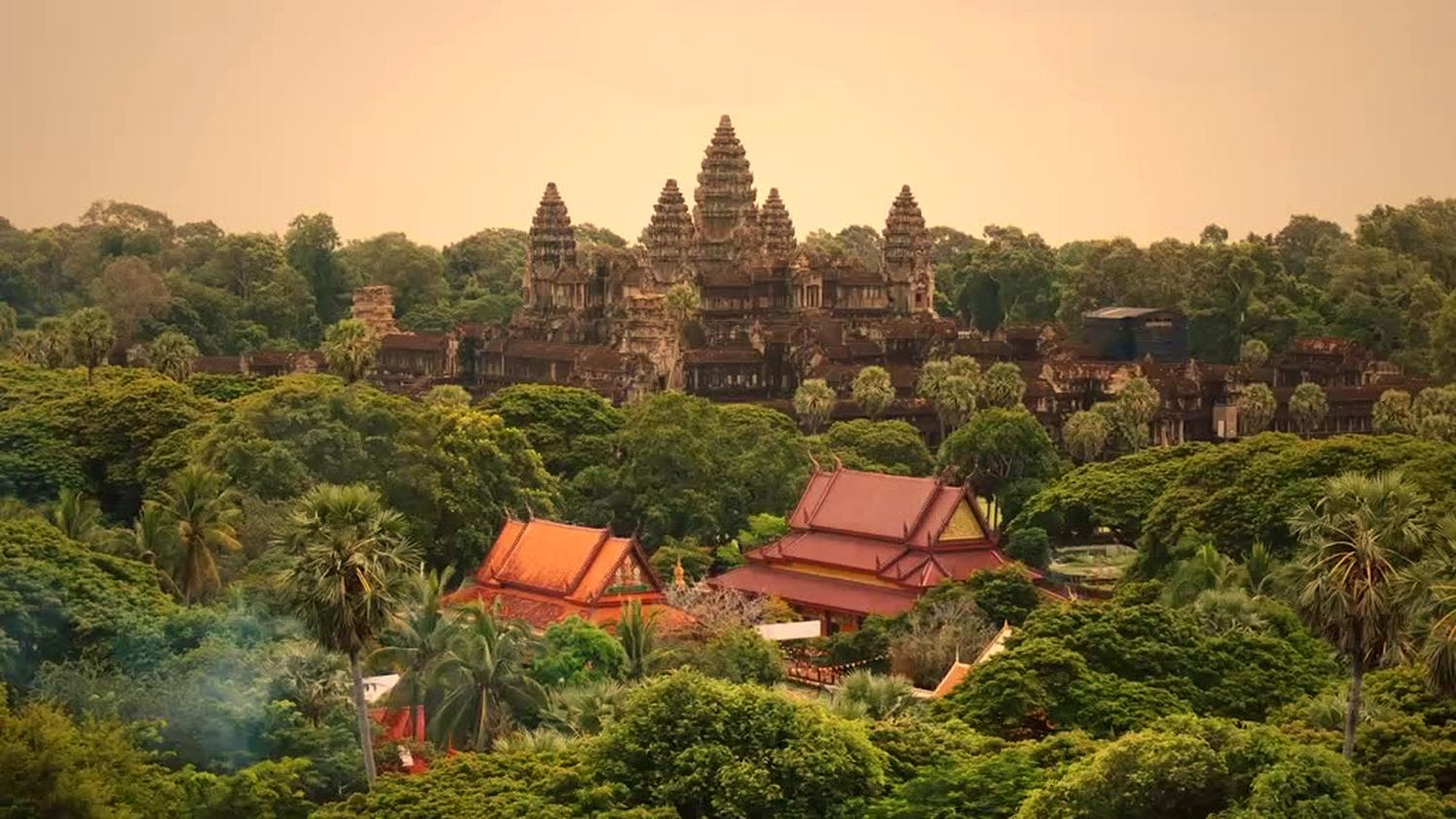
Angkor Wat gets the sunrise crowds and the postcard silhouette, but it's a single temple in a complex that once covered an area larger than modern Paris. A few kilometers north, inside the walled city of Angkor Thom, two hundred stone faces watch over the jungle from the Bayon. A short ride further, the roots of centuries-old trees have folded entire galleries of Ta Prohm into their grip, left that way on purpose. If Angkor Wat is the headline, this is the rest of the story - and for many travelers, it's the part they remember longest.
Angkor Thom and the Faces of the Bayon
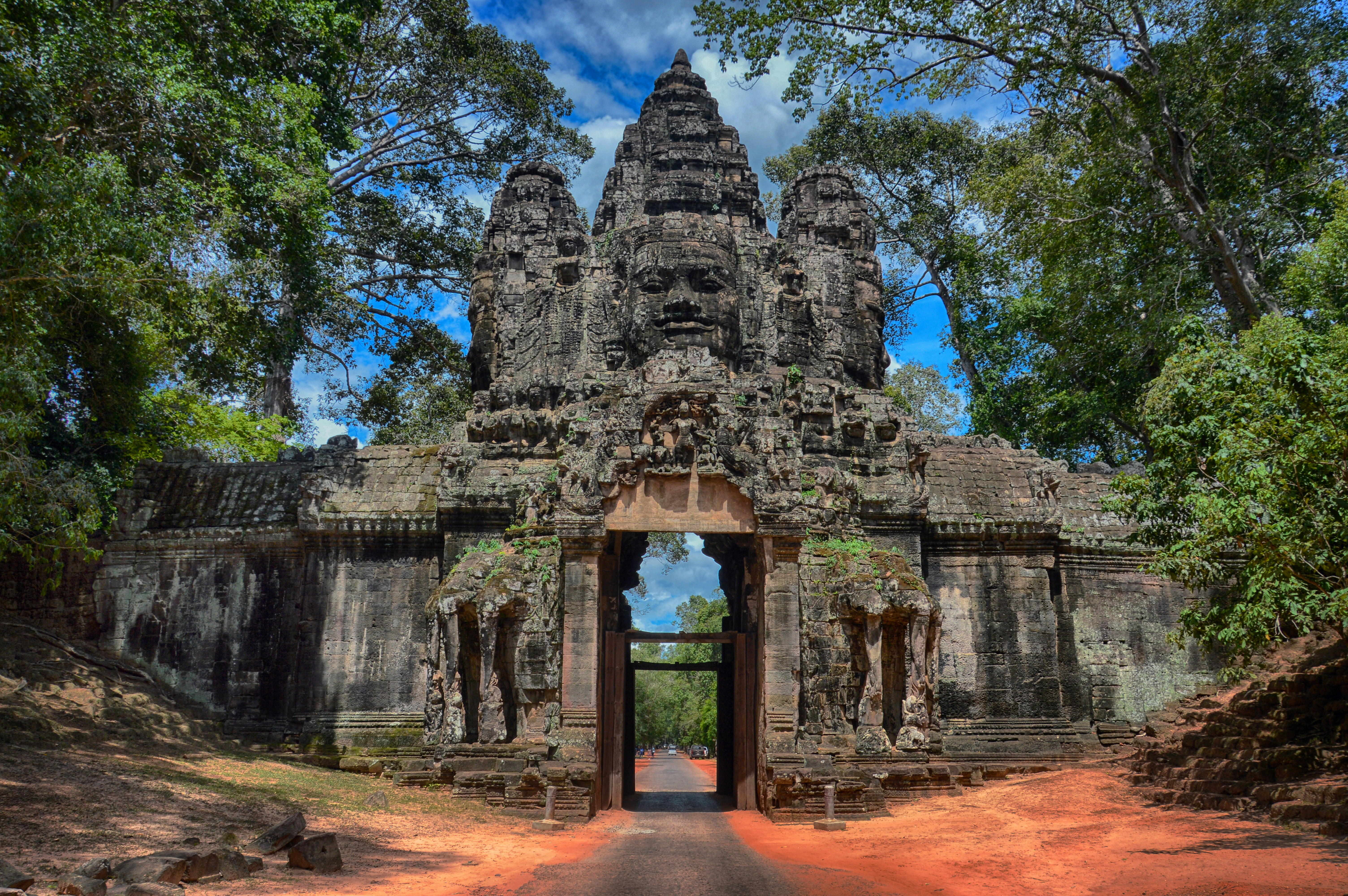
Angkor Thom was the last great capital of the Khmer Empire, a walled and moated city built at the end of the 12th century by King Jayavarman VII. You enter through one of five monumental gates, each crowned with four enormous stone faces looking out toward the cardinal directions, flanked by rows of gods and demons locked in a tug-of-war along the causeway - a scene lifted straight from Hindu mythology's churning of the ocean of milk. Passing beneath one of these gates, dwarfed by faces that have watched the road for eight hundred years, is as memorable an entrance as any temple inside.
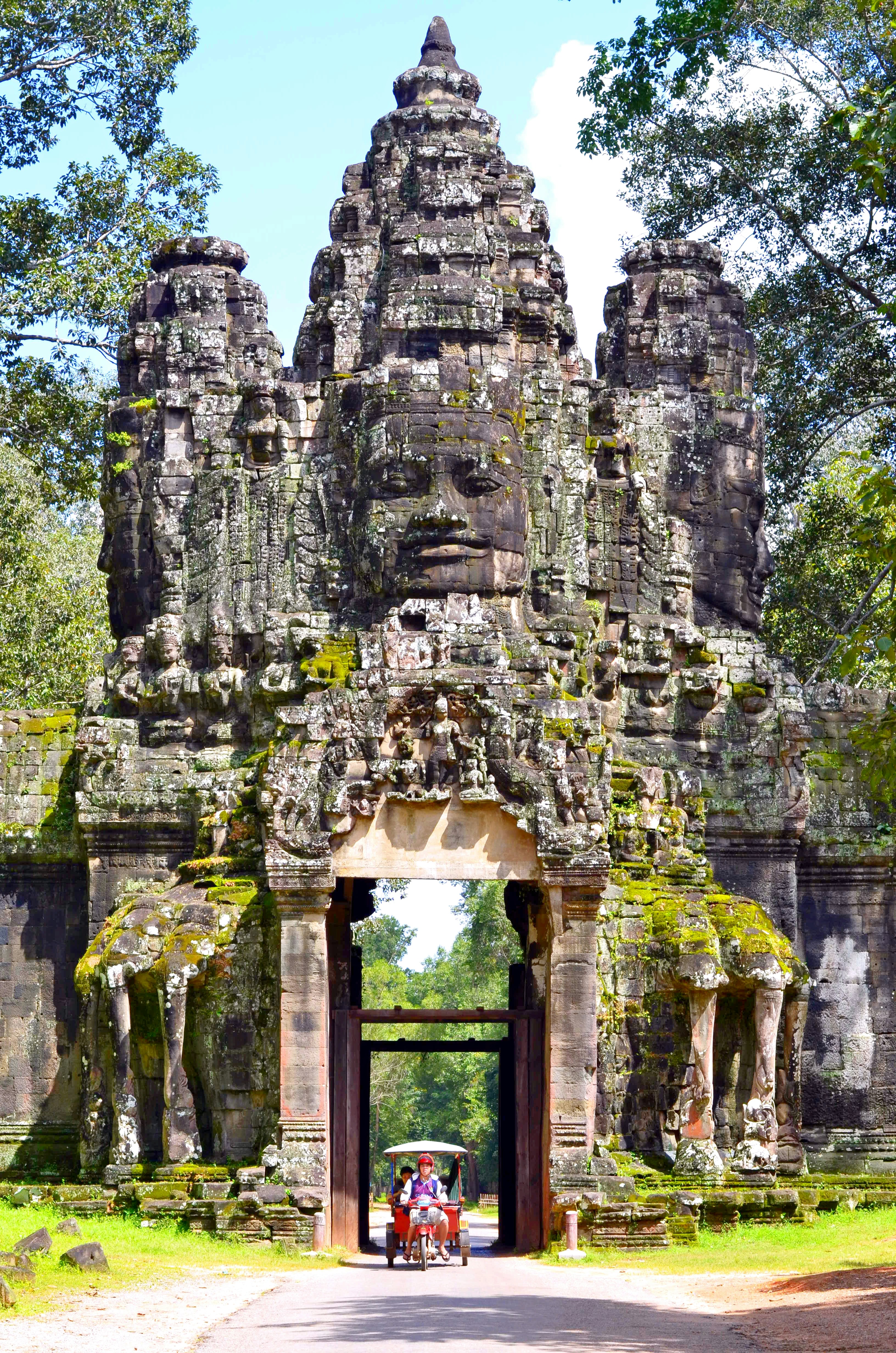
At the center of Angkor Thom stands the Bayon, Jayavarman VII's state temple and the site most people picture when they think of Angkor's famous faces. More than two hundred serene, faintly smiling faces are carved into 54 towers, multiplying the same expression across every angle you look. Most historians read the face as a composite of the king and the bodhisattva Avalokiteshvara, a ruler presenting himself as compassion made stone. Unlike Angkor Wat's strict symmetry, the Bayon feels layered and a little chaotic - narrow corridors, sudden stairways, faces appearing around corners you didn't expect - which is exactly why it rewards slow wandering rather than a quick lap.
Bayon at a Glance:
- Built: Late 12th - early 13th century under Jayavarman VII
- Faces: Over 200, carved into 54 towers
- Located: Center of Angkor Thom, the last Khmer capital
- Best light: Mid-morning, when the sun clears the surrounding trees
Ta Prohm: Where the Jungle Won
A short drive east of Angkor Thom, Ta Prohm is the temple that looks like it lost a fight with the forest - because, in a controlled way, it did. When conservators began work here in the early 2000s, they made a deliberate choice: rather than clear every tree and rebuild the temple to its original state, as had been done elsewhere at Angkor, they would let a portion of Ta Prohm stay as it was found. The result is the temple most people mean when they say "the jungle temple" or "the Tomb Raider temple" - a nod to the 2001 film that shot scenes here and introduced Ta Prohm to a generation who'd never heard of Angkor.
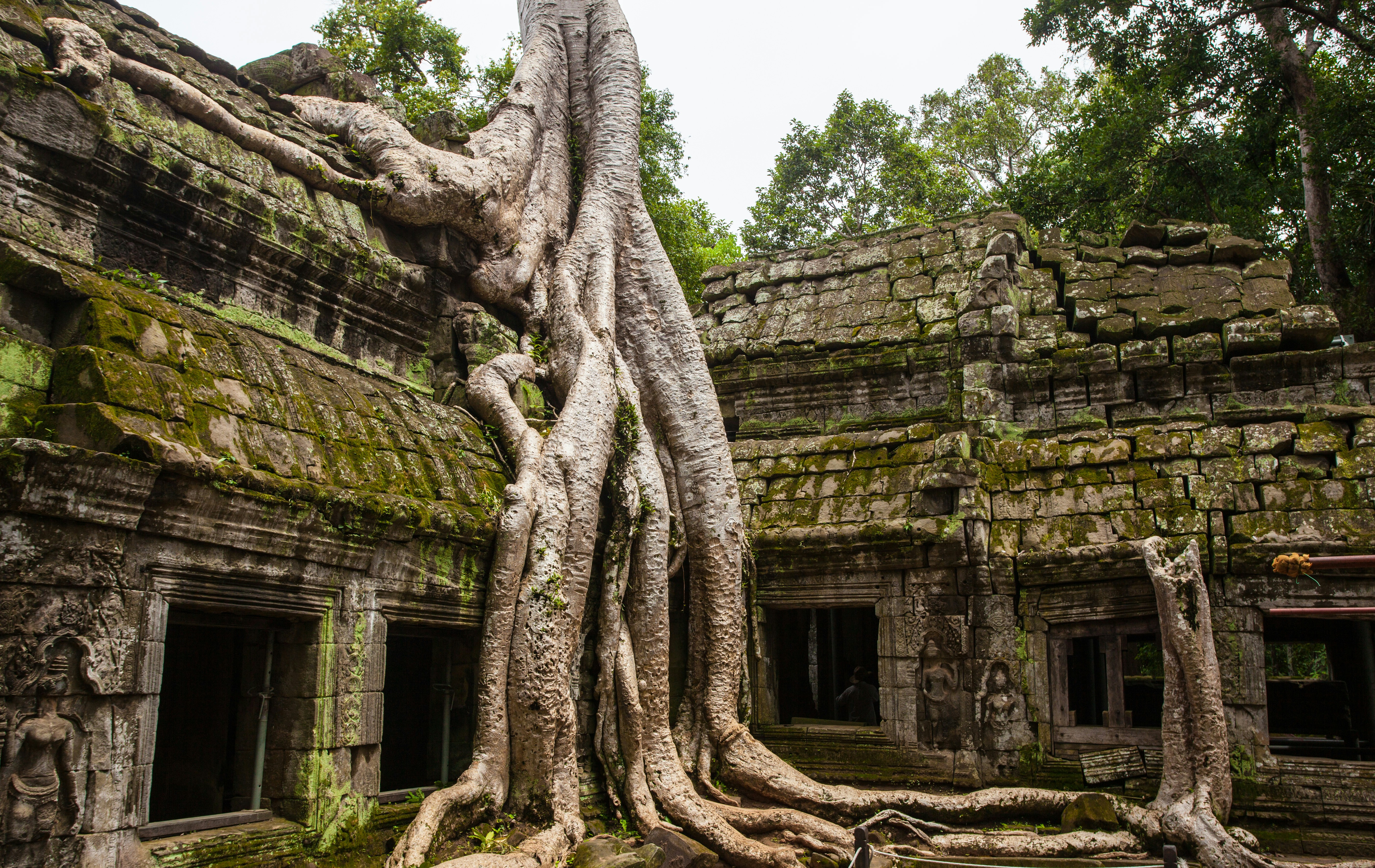
The roots doing the damage - and the drama - belong mostly to silk-cotton and strangler fig trees, whose trunks flow over doorways and rooflines like something poured rather than grown. Walkways and platforms have been added so visitors can get close without adding to the wear, and conservation teams continue to stabilize sections that have become genuinely dangerous, but the overall feeling - stone galleries half-swallowed by living wood, sunlight breaking through in narrow shafts - has been preserved rather than cleaned away. Go early or late in the day if you can; midday brings tour groups by the busload, and Ta Prohm's narrow corridors don't absorb crowds the way Angkor Wat's open courtyards do.
Planning the Small and Grand Circuits
Most itineraries around Siem Reap are built on two loops. The Small Circuit covers roughly 17 kilometers and typically includes Angkor Wat, Angkor Thom (with the Bayon), and Ta Prohm in a single day - a reasonable pace if you start before sunrise and don't try to linger everywhere. The Grand Circuit extends further, around 26 kilometers, and adds lesser-visited temples like Preah Khan and Ta Som, better suited to a second day or for travelers who want more quiet corridors and fewer crowds.
Angkor's multi-day passes (one, three, or seven days) are designed with exactly this pacing in mind, and the three-day pass in particular tends to suit most visitors best: one day for Angkor Wat at sunrise, one for the Small Circuit's Bayon and Ta Prohm, and one for the Grand Circuit or a further trip out to Banteay Srei, the intricately carved pink sandstone temple about 25 kilometers from the main complex. A private guide earns their keep here - not just for the history, but for timing each stop around light and crowds so the day doesn't collapse into one long queue for photos.
Ready to build your own temple circuit? Email our Tour Concierge at [email protected] for help pacing Angkor Wat, the Bayon, and Ta Prohm around the light, the crowds, and however many days you have in Siem Reap.