Angkor Wat at Sunrise: A Visitor's Guide to Cambodia's Ancient Temple City
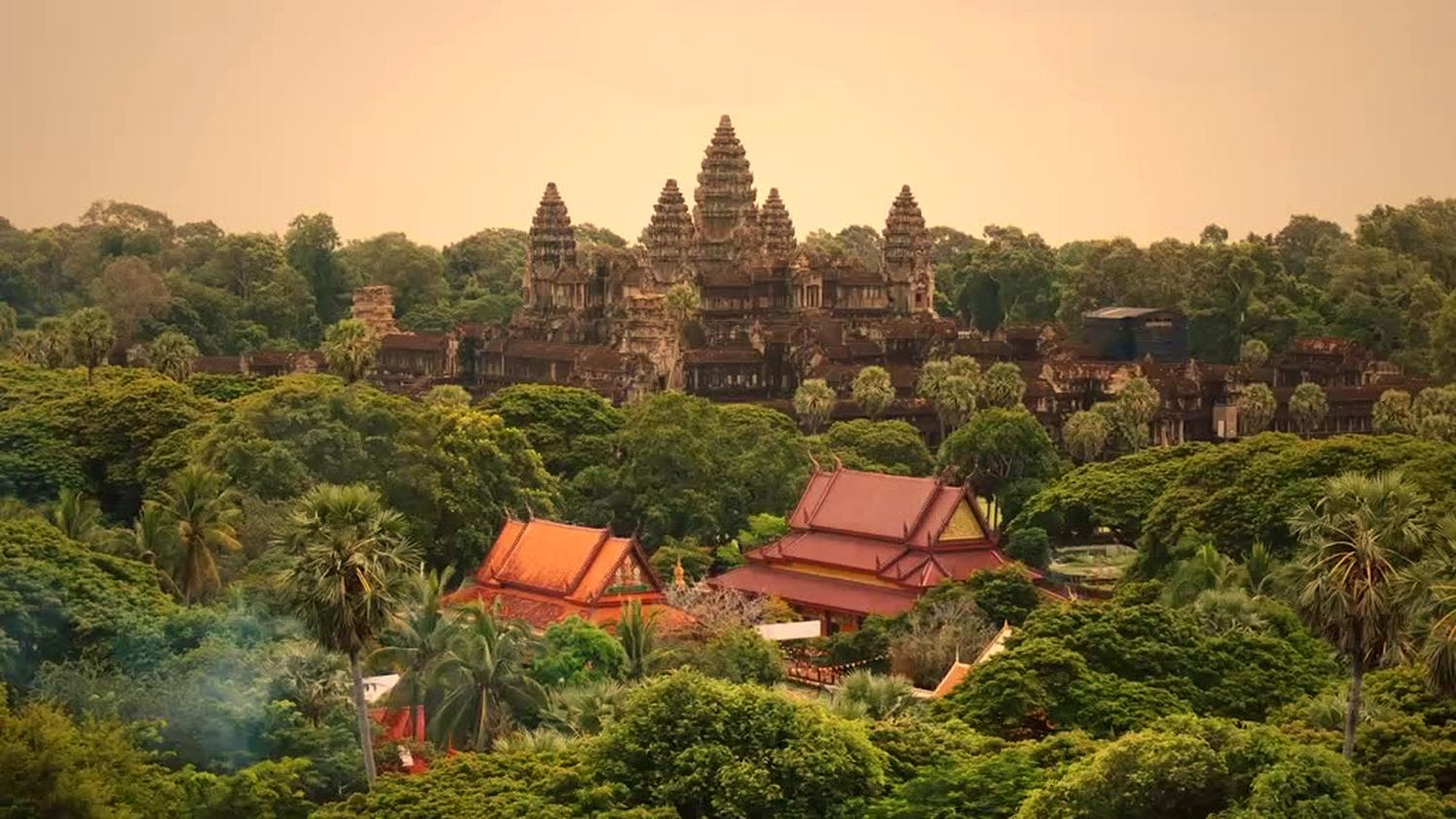
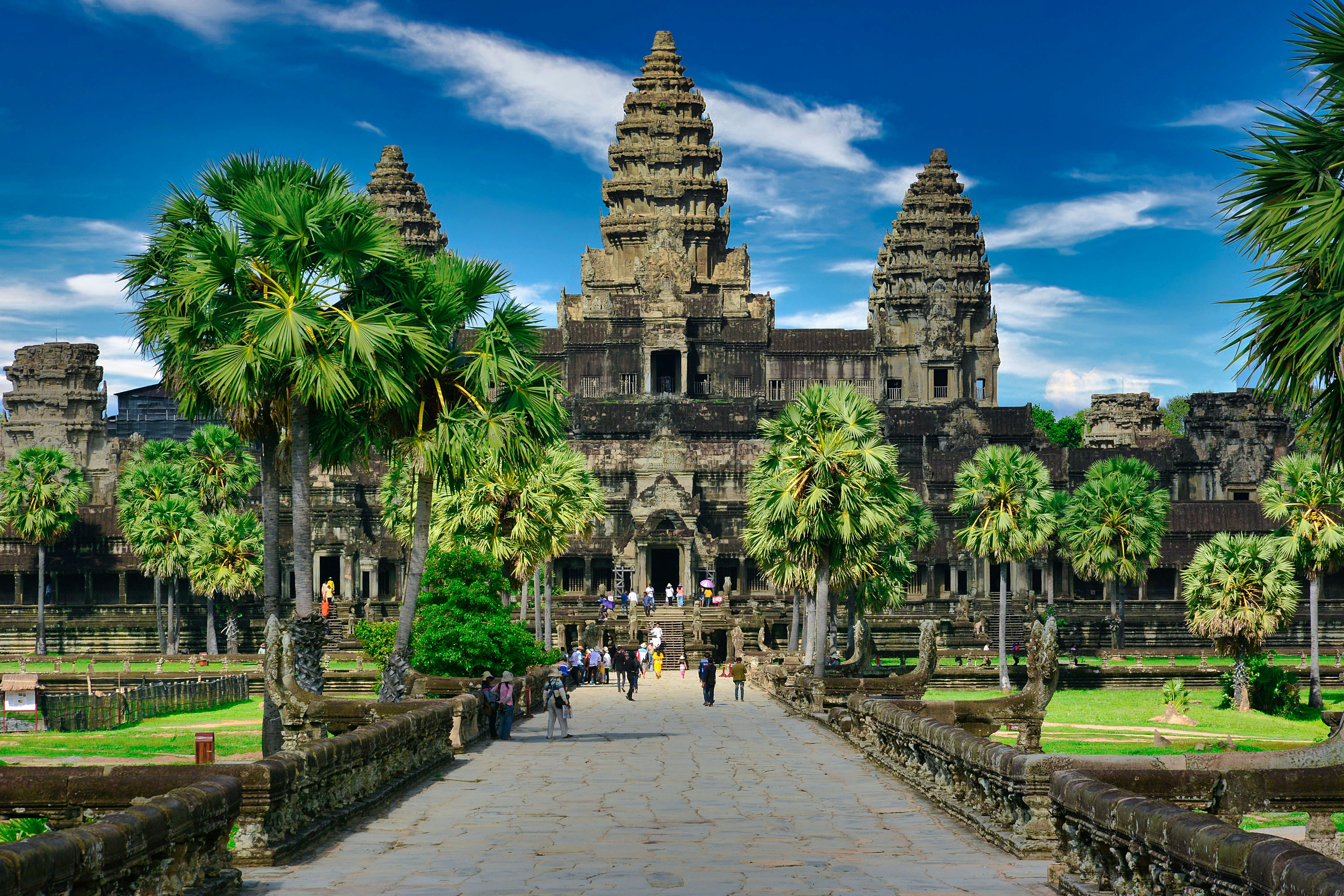
Before the first light reaches Siem Reap, a crowd is already gathering across the moat from Angkor Wat, waiting for the sky behind its five lotus-bud towers to turn from black to gold. Angkor Wat is the single largest religious monument on earth, the spiritual heart of the wider Angkor Archaeological Park - some 400 square kilometers of temples, reservoirs, and jungle that once formed the capital of the Khmer Empire. To stand here at dawn is to watch a nine-hundred-year-old skyline wake up exactly as it has every morning since the 12th century.
From Khmer Capital to World Heritage Site
Angkor Wat was built in the first half of the 12th century by King Suryavarman II as a state temple and eventual mausoleum, dedicated to the Hindu god Vishnu. It formed the ceremonial core of Angkor, capital of the Khmer Empire, which at its height stretched across what is today Cambodia, Thailand, Laos, and southern Vietnam. By the late 12th century, under King Jayavarman VII, the empire's center of gravity shifted to the nearby walled city of Angkor Thom, and Angkor Wat itself was gradually converted to Theravada Buddhist use - a transition still visible in the saffron- robed monks and gilded Buddha statues found throughout the temple today.
Unlike many Angkorian temples, Angkor Wat was never fully abandoned; local communities and Buddhist monks maintained it continuously even as the wider empire declined in the 15th century. French naturalist Henri Mouhot's widely read 1860s account introduced the temple to Western audiences, sparking a wave of restoration efforts that continued through the French colonial period and, after a long pause during the Khmer Rouge era, resume today under Cambodian and international teams. Angkor was inscribed as a UNESCO World Heritage Site in 1992.
Anchoring Centuries of Khmer History
- 802: Jayavarman II founds the Khmer Empire, beginning centuries of temple-building at Angkor.
- 1113-1150: Suryavarman II reigns and constructs Angkor Wat as his state temple.
- Late 1100s: Jayavarman VII builds Angkor Thom and the Bayon following a Cham invasion.
- 1860s: Henri Mouhot's published journals bring Angkor to global attention.
- 1992: Angkor is inscribed as a UNESCO World Heritage Site.
A Temple Built as a Map of the Universe
Angkor Wat's design follows the concept of a temple-mountain, its five central towers representing the peaks of Mount Meru, home of the gods in Hindu and Buddhist cosmology, surrounded by a vast moat standing in for the cosmic ocean. Nearly 800 meters of intricately carved bas-relief galleries wrap the outer walls, depicting scenes from the Hindu epics the Ramayana and Mahabharata alongside the Churning of the Sea of Milk and historical processions of Suryavarman II's army - one of the longest continuous stone carvings in the world.
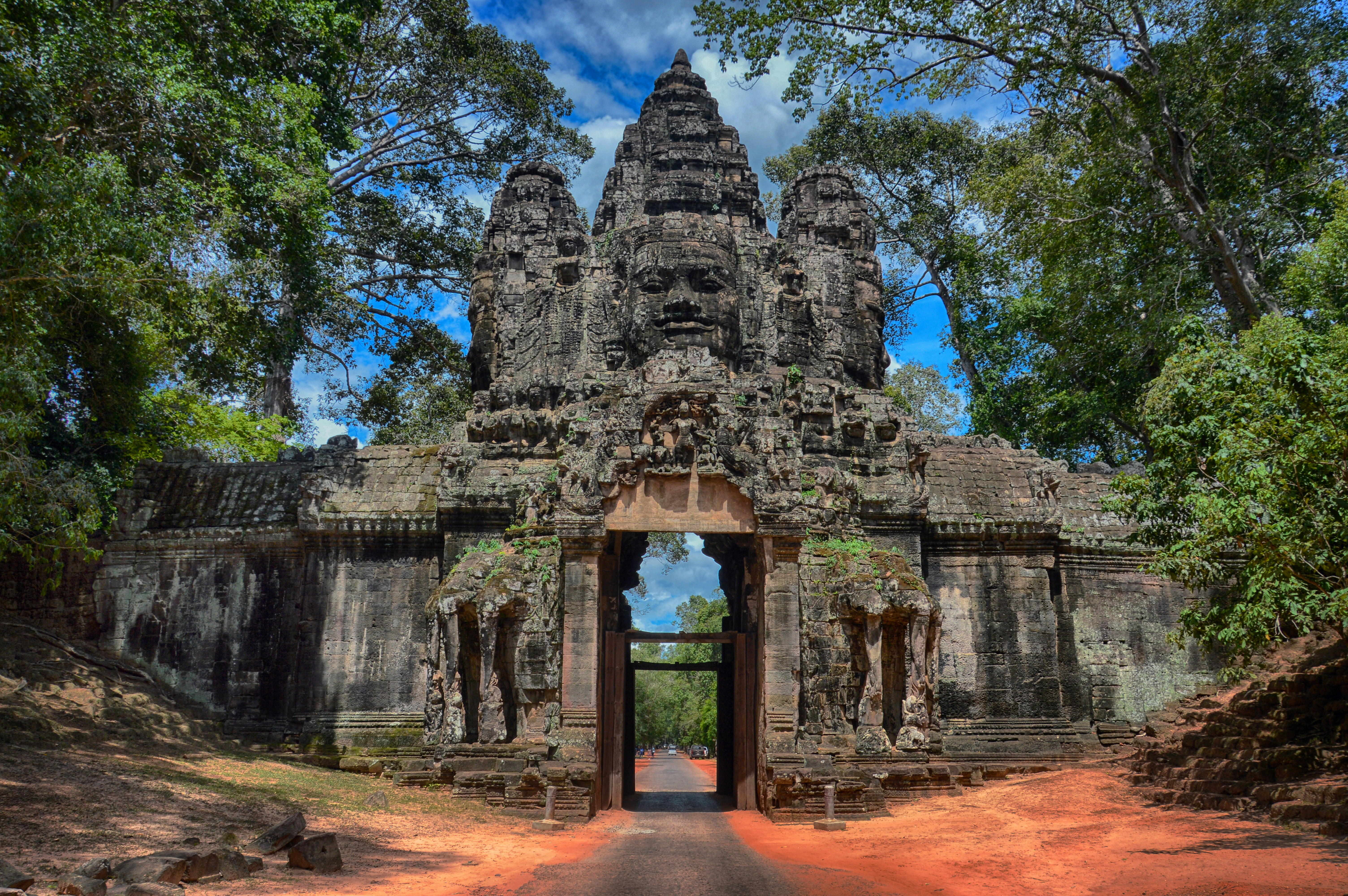
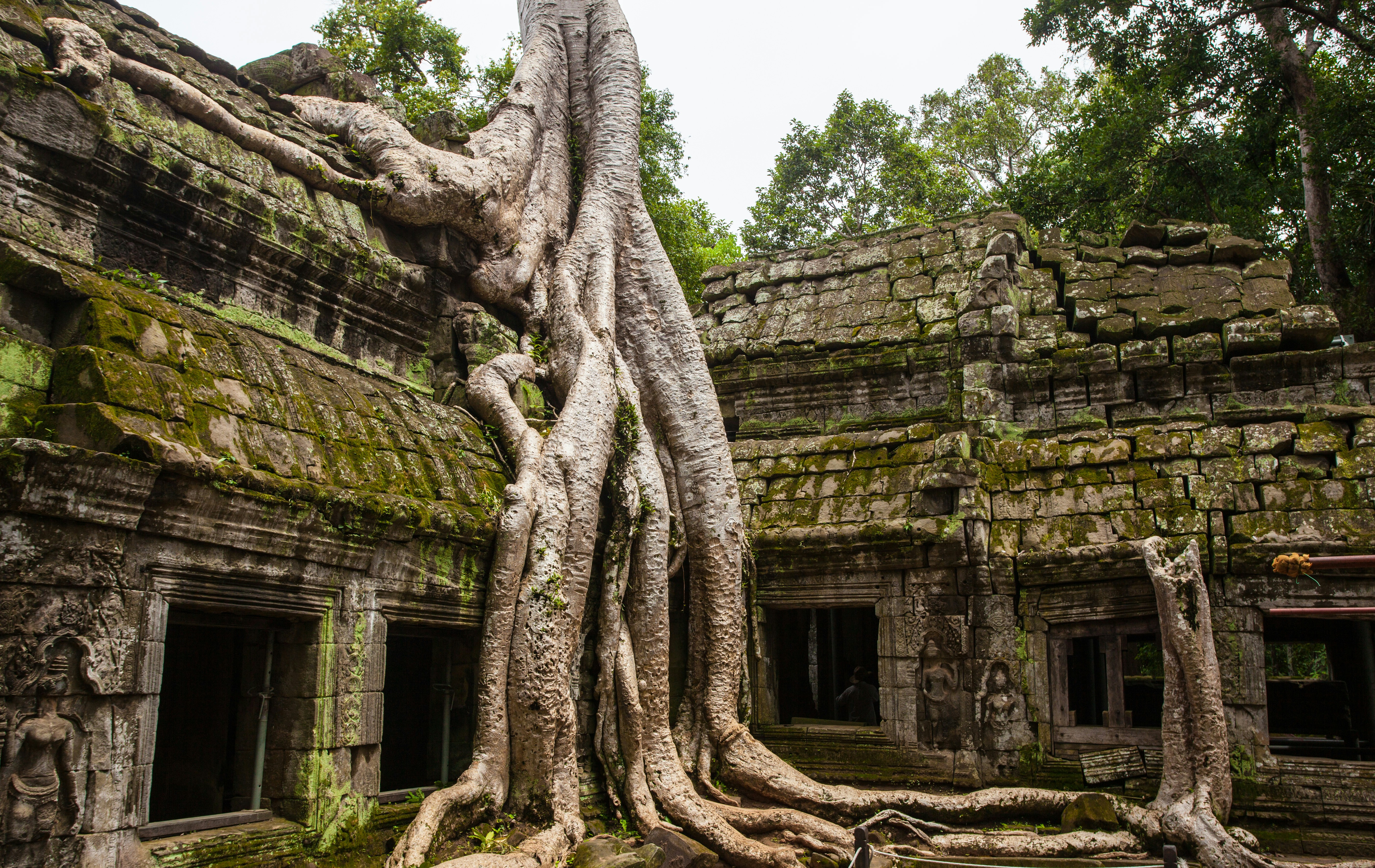
A short distance north, Angkor Thom's central Bayon temple takes a very different approach: 216 enormous stone faces, carved with the same serene half-smile, gaze out from 54 towers in every direction. Further east, Ta Prohm has been deliberately left much as it was found - massive silk-cotton and strangler fig roots wrapping through doorways and across rooflines, a favorite for photographers and the temple most associated with Angkor's "lost city" atmosphere.
Moments That Shaped Angkor
Angkor's history is one of ambition, invasion, and quiet endurance. A devastating Cham naval raid up the Tonle Sap in 1177 nearly toppled the empire before Jayavarman VII's counterattack and subsequent building campaign - Angkor Thom and the Bayon among his legacy - ushered in its final golden age. As the empire's influence receded in the 15th century, the capital shifted south, and Angkor's temples slipped slowly into jungle, tended by monks even as the city around them emptied. The 20th century brought its own upheavals - war and the Khmer Rouge period halted restoration work for years - yet Angkor endured, and Cambodia's temples are once again its most visited living monument.
"For centuries, the mere mention of Cambodia has conjured mystery and adventure - a country revealed at Angkor as the birthplace of the mighty Khmer Empire."
Practical Insights for Exploring
Angkor Archaeological Park opens before dawn, typically around 5 a.m., specifically to allow visitors to watch sunrise over Angkor Wat. Entry requires an Angkor Pass - available as a one-day, three-day, or seven-day ticket - purchased at the official ticket center outside Siem Reap; photo ID is required, so bring your passport. The dry season, from November through March, offers the most comfortable temperatures and the clearest sunrise skies, while the wetter months bring fewer crowds and greener grounds.
Dress modestly, as required at active religious sites - shoulders and knees covered - and expect steep, uneven stone stairs at several temples, including the climb to Angkor Wat's upper terrace. Arriving before the gates open and heading first to the lesser-visited eastern side of Angkor Wat rewards early risers with a far quieter sunrise than the main western approach.
Design Your Temple Experience
Begin before dawn at Angkor Wat's reflecting pools, where the temple's silhouette and its mirror image both catch the first light. Once the sun has risen, cross the causeway and climb to the upper sanctuary for panoramic views over the surrounding moat and jungle canopy. From there, most visitors continue north into the walled city of Angkor Thom, entering through one of its monumental gates before reaching the Bayon and its field of smiling stone faces.
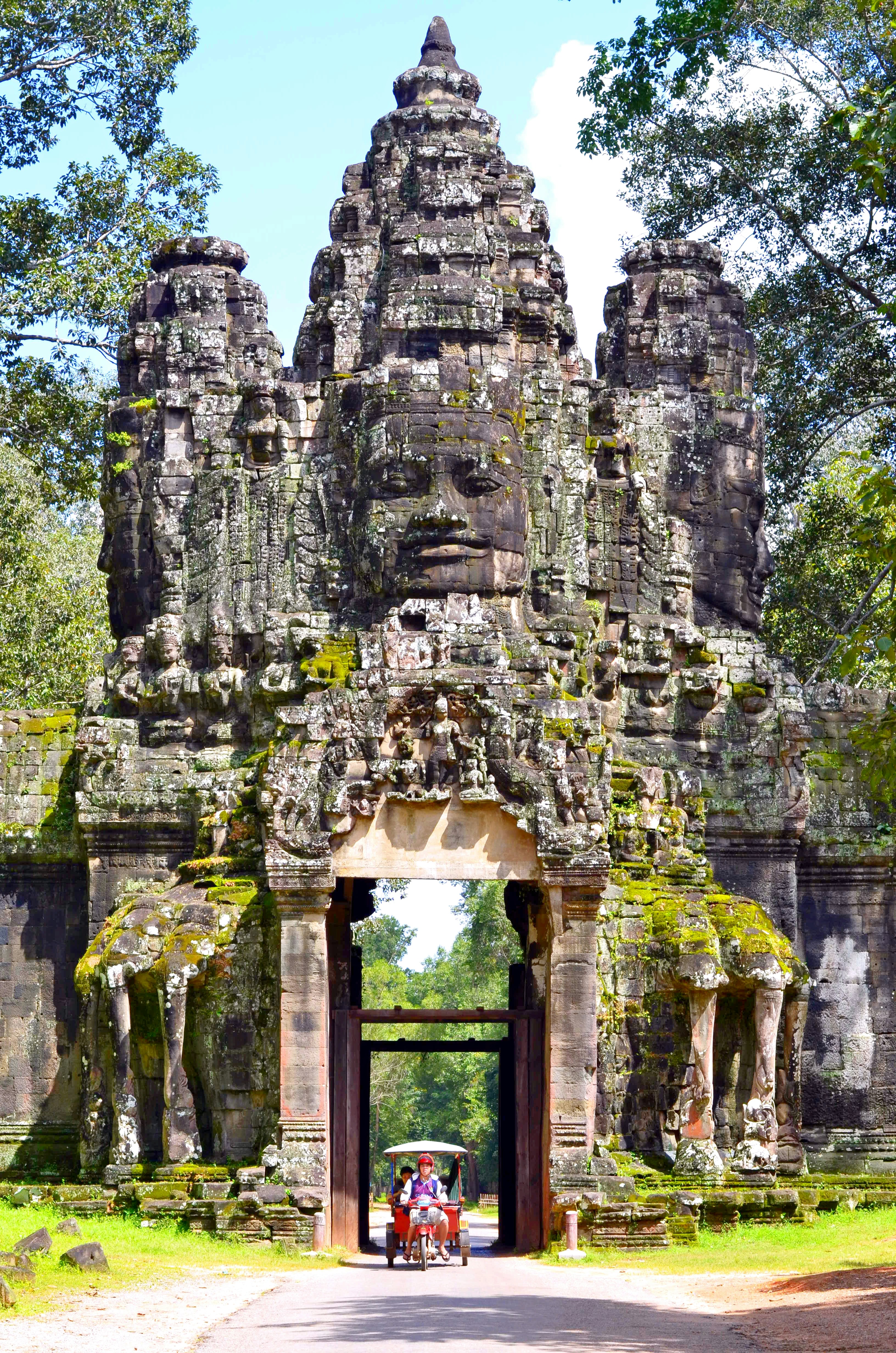
Spend the cooler mid-morning hours at Ta Prohm, tracing the roots that have grown into the stonework over centuries, before the midday heat sets in. Many itineraries close the loop with the elegant, smaller- scale carvings of Banteay Srei, the "Citadel of Women," carved from pink sandstone about an hour outside the main park - often considered the finest decorative stonework in all of Angkor.
Itinerary Inspiration Around Siem Reap
After a morning among the temples, Siem Reap's Old French Quarter offers a change of pace - colonial-era shophouses, riverside cafes, and the leafy grounds of the Raffles Grand Hotel d'Angkor, an authentic 1930s Art Deco address that has welcomed travelers to Angkor since 1932. An afternoon boat ride on the Tonle Sap, Southeast Asia's largest freshwater lake, reveals floating villages that shift with the seasons, while a visit to the retired elephants of Angkor, now living freely in protected forest beneath Kulen Mountain, offers a quieter, more reflective counterpoint to the temples.
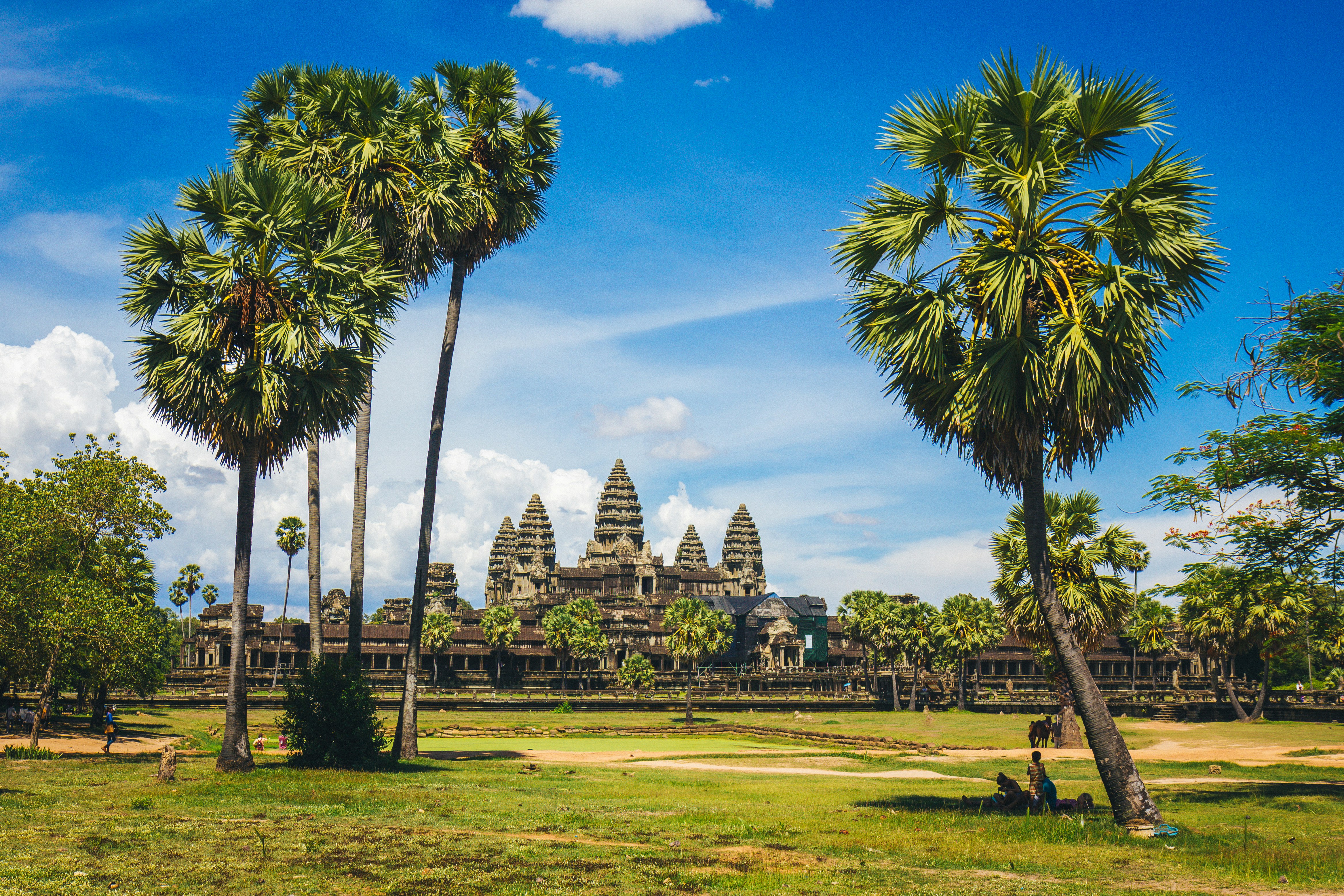
As evening falls, Pub Street and the Old Market fill with the city's most energetic side, but travelers seeking something more intimate might instead join a private market and table experience with a local chef, or simply return to Angkor Wat's western causeway for sunset, when the crowds of dawn have long since departed and the towers glow one final time before dark.
Experience This Attraction With Our Tours
Our Tale of Two Cities journey, created with Raffles Hotels & Resorts, pairs royal Phnom Penh with ancient Angkor across seven days, with a private Raffles Butler guiding you between two legendary hotels - Raffles Hotel Le Royal and Raffles Grand Hotel d'Angkor. Highlights include a pre-dawn Angkor Wat sunrise, a Vespa ride into overgrown corners of the Archaeological Park few visitors ever reach, and a torch-lit dinner inside the temple complex itself.

Prefer a single, private day among the temples? Our Angkor Wat at Sunrise experience collects you before dawn with a private guide, moving through the temple's bas-relief galleries, Ta Prohm's strangler figs, and the stone faces of the Bayon in the quiet hours before the day's crowds arrive. For the full range of ways to experience the Kingdom, explore our Cambodia journeys.
Is It Worth Visiting?
Without question. Angkor Wat and the wider Archaeological Park distill nine centuries of Khmer art, faith, and empire into a single, walkable landscape unlike anywhere else on earth. Whether you come for the sunrise over its towers, the roots of Ta Prohm, or the silent faces of the Bayon, give the temples more than a single rushed morning - Angkor rewards travelers who slow down to match its scale.
Traveler's Questions
What time should I arrive for sunrise?
Arrive by 5:00-5:15 a.m. to claim a spot at the reflecting pools before the park opens, roughly 45 minutes to an hour before actual sunrise, which shifts seasonally between about 5:30 and 6:15 a.m.
How many days do I need at Angkor?
A single day covers the highlights - Angkor Wat, Angkor Thom, and Ta Prohm - but a three-day pass allows a far more relaxed pace and access to farther-flung temples like Banteay Srei and Beng Mealea.
What should I wear to the temples?
Modest dress is required at active religious sites: shoulders and knees covered for all visitors. Comfortable, closed-toe shoes are strongly recommended for the steep, uneven stone stairways.
Is the Angkor Pass the same as my flight or hotel booking?
No, the Angkor Pass is a separate entry ticket purchased locally at the official ticket center, required in addition to any tour or transport arrangements. Bring a passport, as it is required for purchase.
When is the best season to visit?
November through March, Cambodia's dry season, offers the most comfortable temperatures and clearest skies for sunrise. April and May are hottest; the wet season from June to October brings dramatic clouds and lush greenery with fewer crowds.
For private access, after-hours temple experiences, or a curated journey across Cambodia, connect with our Tour Concierge at [email protected].