The 9/11 Memorial & Museum: A Visitor's Guide to Ground Zero
At the southern tip of Manhattan, where the Twin Towers once stood, two enormous voids sink thirty feet into the earth, their edges lined with bronze and the names of 2,983 people. The National September 11 Memorial & Museum occupies the site known simply as Ground Zero - eight acres that moved, within two decades, from smoking ruin to reflecting pool, from rescue site to place of quiet pilgrimage. It is one of the most visited memorials in the world, and one of the few that asks nothing of you but to stand still for a moment.
From Ground Zero to Memorial
On the morning of September 11, 2001, hijacked planes struck the north and south towers of the World Trade Center; both fell within two hours, along with a chain of events that would also bring down 7 World Trade Center and strike the Pentagon and a field in Shanksville, Pennsylvania. Nearly 3,000 people died that morning, including 343 members of the New York City Fire Department - a single-day loss greater than the department had suffered in its entire previous history.
Recovery and cleanup at the sixteen-acre site continued for months. Planning for a permanent memorial began almost immediately, culminating in a 2003 international design competition that drew more than 5,200 entries from 63 countries - among the largest design competitions ever held. Architect Michael Arad's proposal, "Reflecting Absence," was selected in 2004; landscape architect Peter Walker later joined to shape the plaza around it. The memorial opened to the public on September 11, 2011, the tenth anniversary of the attacks. The museum, built seven stories beneath the plaza around surviving structural remnants, followed in May 2014.
Key Dates at the World Trade Center Site
- 1973: The original Twin Towers open, briefly the world's tallest buildings.
- 2001: The September 11 attacks destroy the towers and take nearly 3,000 lives.
- 2004: Michael Arad's "Reflecting Absence" is chosen from over 5,200 design entries.
- 2011: The Memorial opens on the tenth anniversary of the attacks.
- 2014: The Museum opens seven stories below the plaza, built around the original slurry wall.
Reflecting Absence: The Design
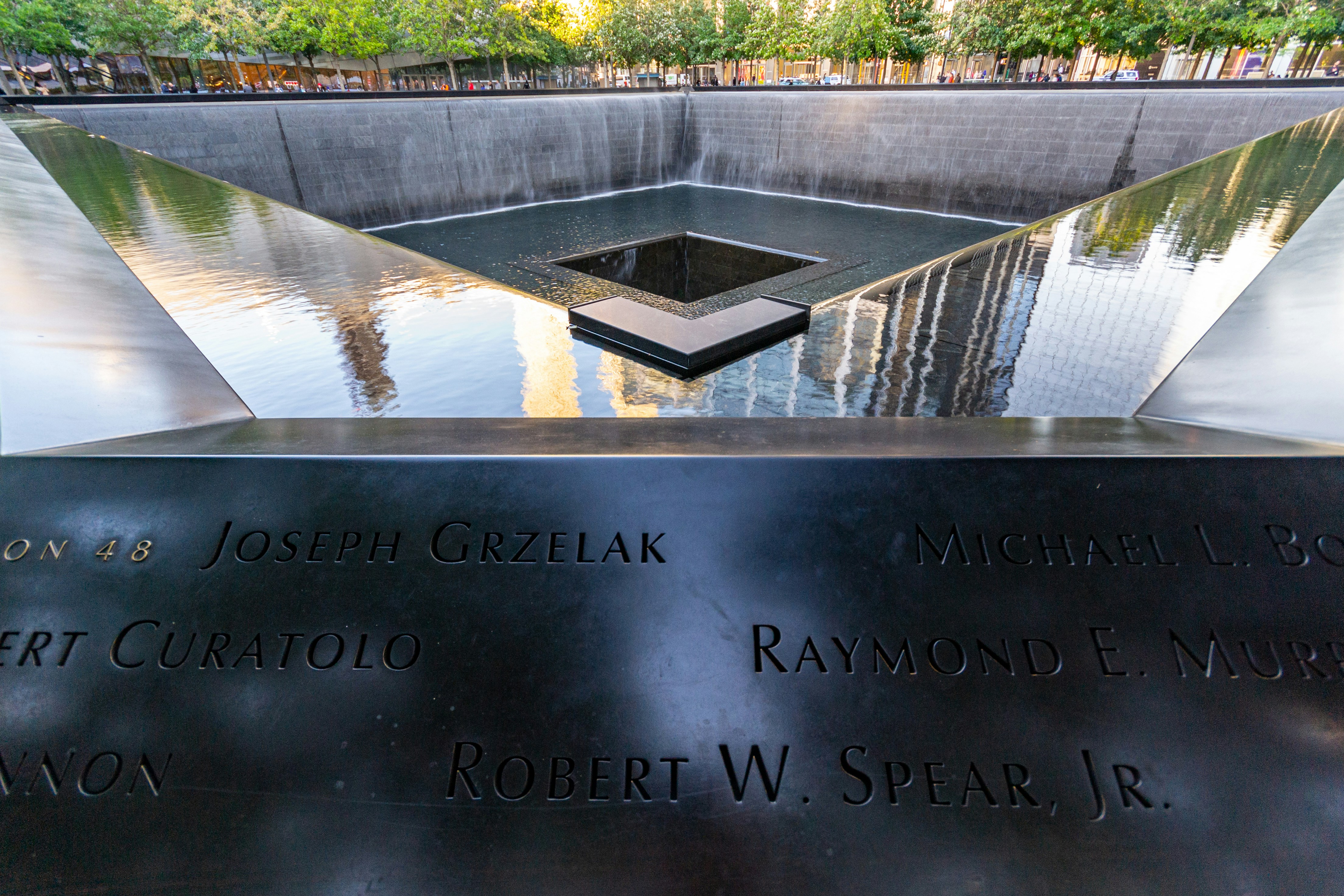
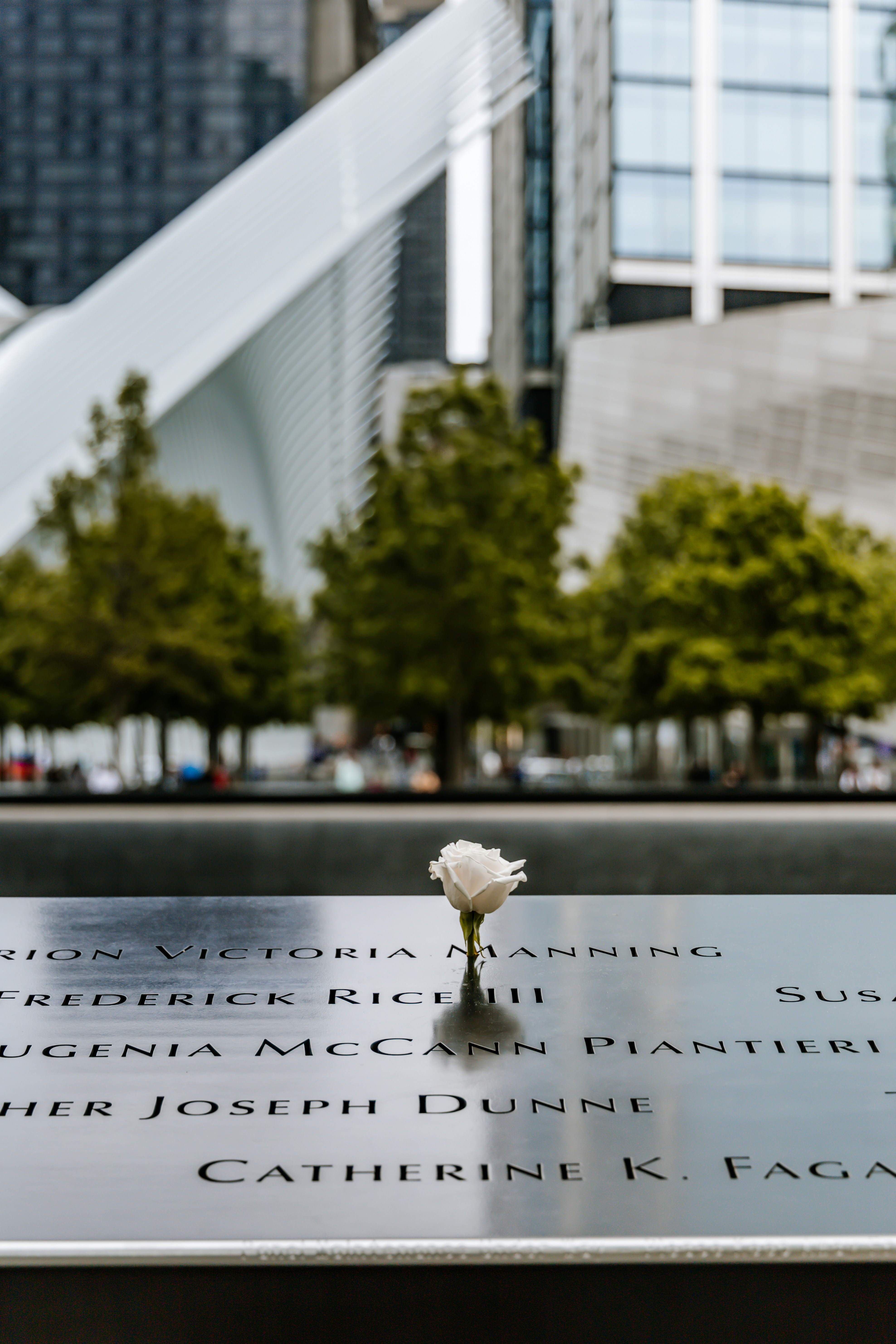
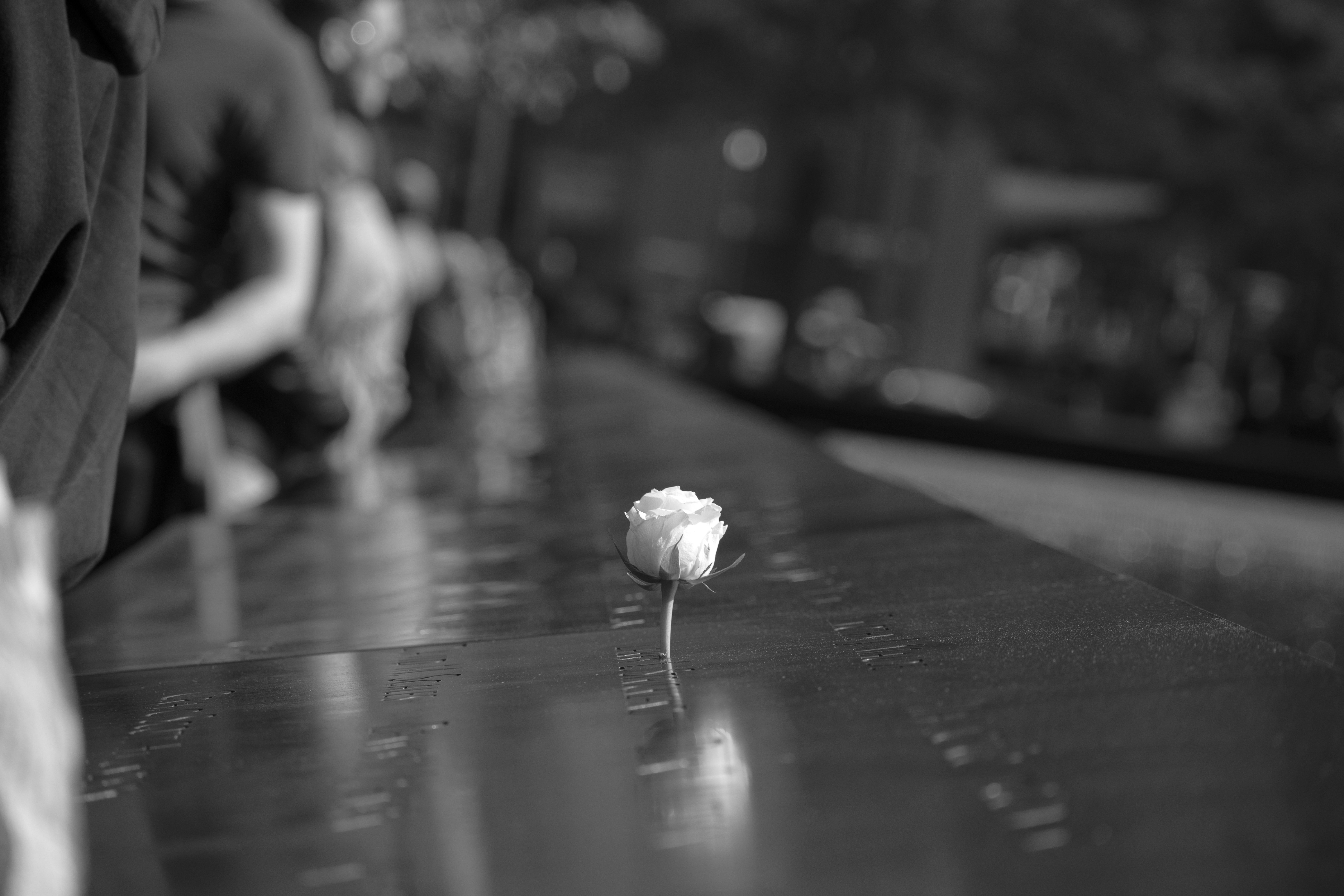
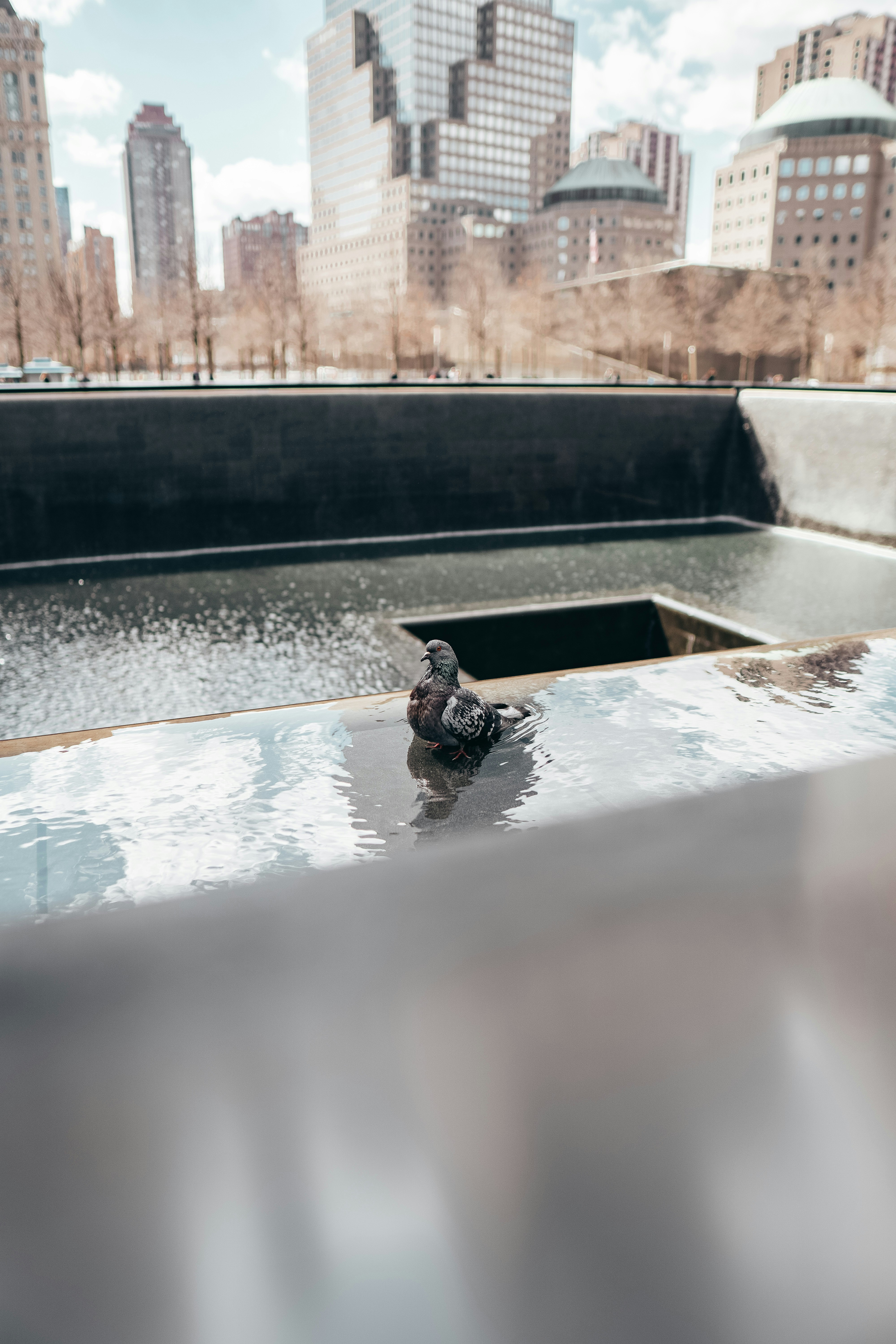
The memorial's two reflecting pools sit exactly within the footprints of the North and South Towers, each nearly an acre in size, water falling thirty feet down their walls before disappearing into a smaller central void - the largest man-made waterfalls in North America. Bronze parapets ring the pools, inscribed with the names of everyone who died in the 2001 and 1993 attacks, arranged not alphabetically but through a system of "meaningful adjacencies" requested by victims' families: colleagues, friends, and first-responder crews are placed side by side, exactly as they stood in life.
Between the pools, more than 400 swamp white oaks form a canopy across the plaza, one of them set apart. The Survivor Tree, a Callery pear, was pulled from the rubble in October 2001 with a single living branch, nursed back to health, and replanted at the memorial in 2010 - it now blossoms first of any tree on the plaza every spring. Below ground, the museum wraps around the site's excavated bedrock and the slurry wall that held back the Hudson River on September 11 and still holds it back today, alongside artifacts that include the Last Column, twisted steel trident fragments, and the Survivors' Staircase that carried hundreds to safety.
Moments That Shaped the Memorial
St. Paul's Chapel, a few hundred yards from the towers, survived the collapse without a single broken window and became a round-the- clock refuge for rescue and recovery workers, who slept in its pews for eight straight months. Ten House, the firehouse directly across the street, lost six of its own; its bronze memorial wall and firehouse bell - still rung with the old signal for a fallen firefighter, five-five-five-five - stand as a quieter counterpart to the plaza. In the years since, the site has hosted state visits, annual commemorations each September 11 when family members read every name aloud, and the steady, unhurried return of a neighborhood.
"No day shall erase you from the memory of time" - the words of Virgil, cast in bronze at the entrance to Memorial Hall, greet every visitor to the museum below.
Practical Insights for Visiting
The memorial plaza is open daily, free to enter, from early morning into the evening. The museum keeps separate, shorter hours and requires a timed-entry ticket booked in advance, especially in summer and around the September anniversary weekend. Airport-style security screening applies at the museum entrance, so allow extra time and travel light.
The plaza itself asks for a different kind of preparation: cameras are welcome throughout, but visitors are asked to favor personal photographs over posed group shots at the pools. The site is fully step-free, and restrooms are available near the Oculus and inside the museum pavilion.
Design Your Visit
Begin at the South Pool, the footprint of the South Tower, which fell first at 9:59 a.m. - many visitors pause here in silence before circling to read the names. Continue to the Survivor Tree, easy to find by the cluster of visitors it draws each spring, then cross to the North Pool, where the second tower fell at 10:28. From the plaza, descend into the museum's Snøhetta-designed pavilion and follow the ramp down through Foundation Hall to the exhibits built around the original bedrock.
Save time to sit inside Memorial Hall with the "Trying to Remember the Color of the Sky on That September Morning" art installation - 2,983 hand-painted watercolor panels, one for each victim, in every shade of blue the artist could recall from that morning's sky. It is, for many, the quietest and most affecting corner of the entire site.
Itinerary Inspiration Around Ground Zero
Start the morning at St. Paul's Chapel on Broadway and Fulton, then walk the six blocks that 25,000 people once used to evacuate the towers, passing the Vesey Street stairs preserved as the Survivors' Staircase. The Oculus, Santiago Calatrava's soaring transit hub, rises just beyond the plaza and is worth a look inside even if you are not catching a train. One World Observatory, atop the tower that replaced the original 1 World Trade Center, offers a fitting counterpoint from above.
By early afternoon, head south toward Battery Park for river views and the ferry terminal, or east into the Financial District for lunch among the narrow colonial-era streets of Wall Street. As the light softens, many visitors find their way a block from the memorial to a small firefighters' bar that was buried in the collapse and later dug itself out - its walls now covered floor to ceiling with patches left by responders from around the world.
Experience This Site With Our Tours
Our September Morning walking experience is timed to the minute - ninety unhurried minutes from St. Paul's Chapel to the plaza, with two silences observed at 9:59 and 10:28, the exact minutes each tower fell. Before you arrive, we look up a name among the 2,983 - someone who shared your birthday - and carry it with you in a sealed envelope to open at the pools.
The morning closes exactly where the neighborhood's own responders have always gathered: first through the doors of that small, patch-covered bar around the corner, coffee on us, before you carry the day back out into the city.
Is It Worth Visiting?
Yes - and it is unlike any other stop on a New York itinerary. The 9/11 Memorial & Museum is not a monument you view from a distance; it asks you to walk its footprints, read its names, and sit with a history most visitors lived through in real time. Give it a slow morning rather than a rushed hour, and it will leave you with a far deeper understanding of the city than any skyline photograph.
Traveler's Questions
Is the 9/11 Memorial free to visit?
Yes, the outdoor memorial plaza and reflecting pools are free and open to the public daily. Only the museum below ground requires a paid, timed-entry ticket.
How much time should I set aside?
Plan on 45 minutes to an hour for the plaza alone, and two to three hours if you are also visiting the museum. Many visitors find the museum's lower-level exhibits warrant a slower, more deliberate pace than expected.
Is the memorial appropriate for children?
The outdoor plaza is suitable for all ages. The museum's historical exhibits are more intense and are generally recommended for visitors ten and older, with younger children welcome accompanied by an adult.
When is the best time to visit?
Early morning, shortly after the plaza opens, offers the quietest experience and the softest light for photographs of the pools. Weekday mornings are noticeably less crowded than weekends.
Is the site closed on the anniversary?
The plaza remains open on September 11 for the annual commemoration ceremony, though general access is limited during the reading of names. The museum closes to the public that day out of respect for victims' families.
To plan a private morning at Ground Zero or pair it with other Lower Manhattan landmarks, connect with our Tour Concierge at [email protected].