The 2025 Louvre Heist: How Thieves Stole France's Crown Jewels in Eight Minutes
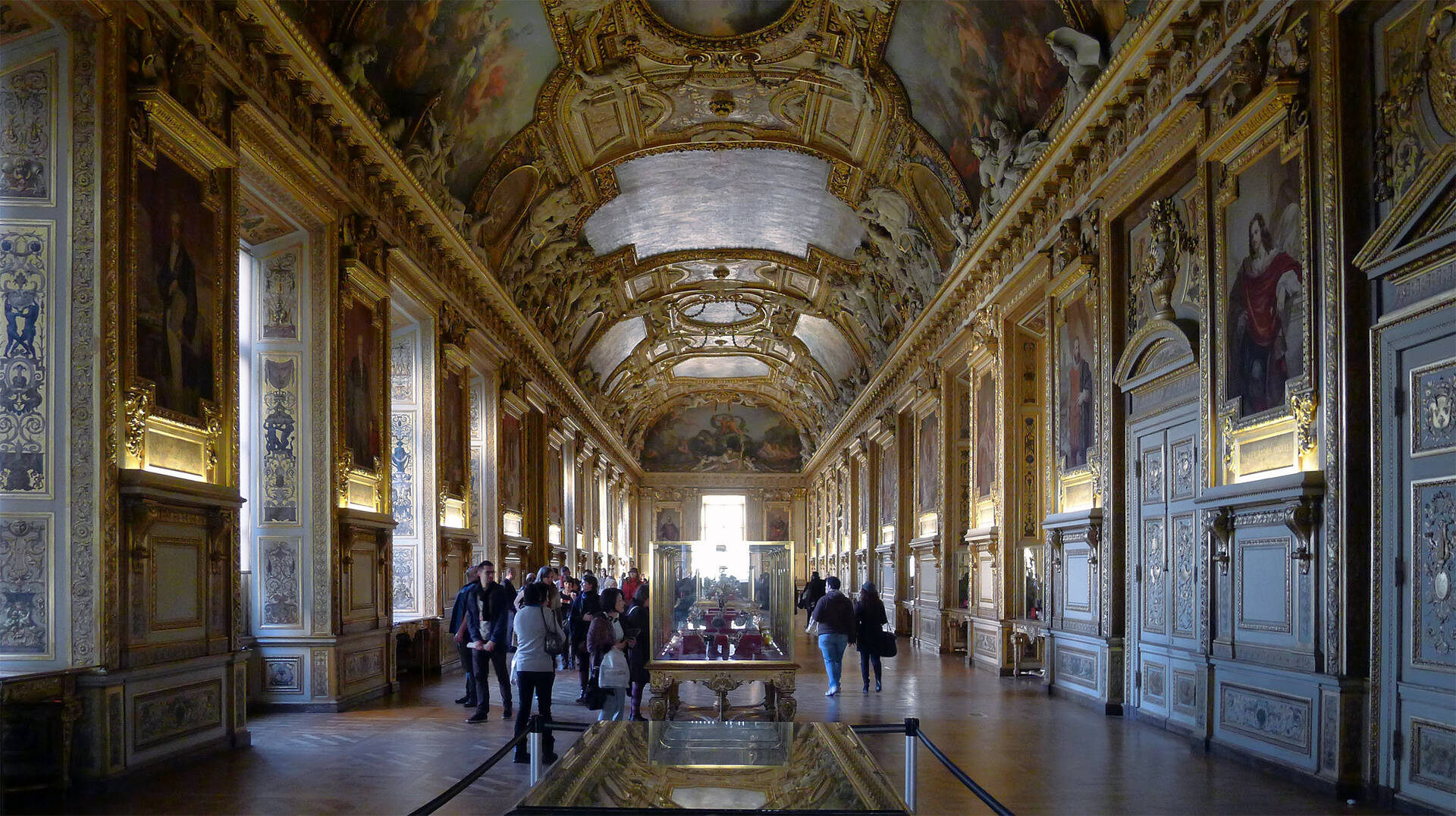
On the morning of October 19, 2025, the unthinkable happened at the world's most visited museum. Four thieves, disguised as construction workers and armed with power tools, broke into the Louvre's legendary Galerie d'Apollon and made off with eight priceless pieces of the French Crown Jewels. The haul, valued at €88 million, included tiaras, necklaces, and earrings that once adorned empresses and queens. The entire operation took less than eight minutes. It was the first major art theft from the Louvre since 1998 - and the most audacious heist in modern French history.
A Sunday Morning Like No Other
The Louvre had opened its doors at 9:00 AM, just like any other Sunday. Thirty minutes later, a small truck with a vehicle-mounted furniture lift - common sights in Parisian neighborhoods - parked along the Seine side of the museum. What happened next would shock the nation.
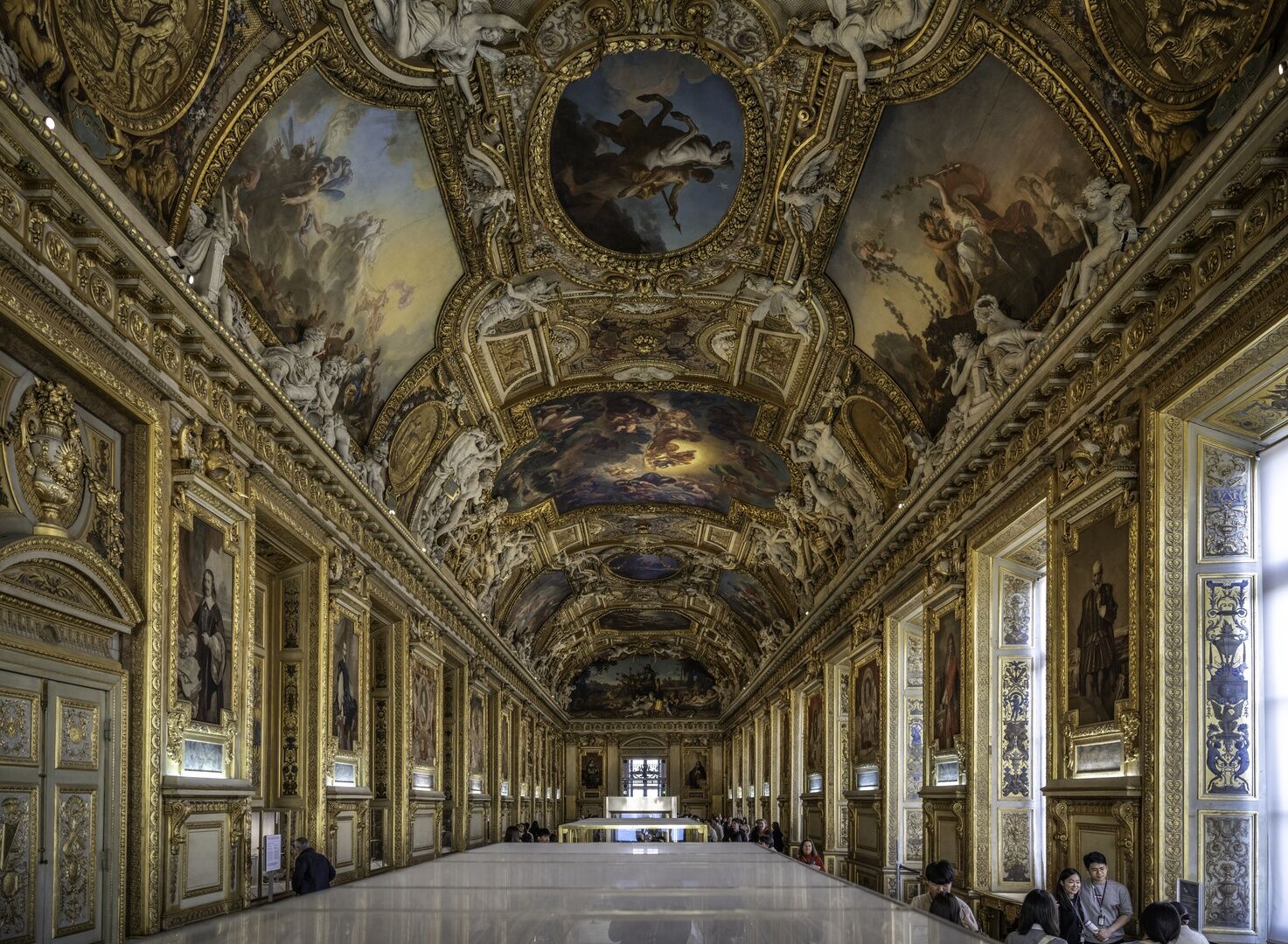
Two men wearing yellow-and-orange high-visibility vests climbed into the furniture lift's basket and rose to a first-floor balcony. Their faces were concealed by balaclavas. Using a disc cutter, they sliced through a glass window and entered the Galerie d'Apollon - the gilded 16th-century gallery that had housed France's Crown Jewels since the 19th century.
Inside, the thieves threatened guards with their power tools, forcing staff to evacuate the room. They then turned the disc cutters on two glass display cases positioned in the center of the gallery. Within minutes, they had extracted nine pieces of jewelry, stuffing them into their pockets before retreating to the window.
As they descended in the lift, they met two accomplices waiting on high-powered motor scooters. In their haste to escape, one of the thieves dropped the Crown of Empress Eugénie onto the street. They left behind another piece - a diamond reliquary brooch - in the gallery itself. But the remaining eight items vanished with them as they fled along the Seine, eventually switching to a van and disappearing into the suburbs.
"We saw some footage: they don't target people, they enter calmly in four minutes, smash display cases, take their loot, and leave. No violence, very professional."
- Culture Minister Rachida Dati
The Stolen Treasures
The pieces stolen represent some of the most historically significant jewels in French history - ornaments that once graced the bodies of empresses, queens, and princesses during the nation's imperial and monarchical eras.
Items Confirmed Stolen:
- Queen Marie-Amélie's Sapphire Parure - tiara, necklace, and single earring from a set originally featuring brooches owned by Hortense de Beauharnais
- Empress Marie Louise's Emerald Set - necklace and pair of earrings, a wedding gift from Napoleon I in 1810
- Empress Eugénie's Pearl and Diamond Tiara - created in 1853, frequently worn in state portraits
- Empress Eugénie's Large Diamond Bow Brooch - a bodice ornament set with over 2,000 diamonds, made in 1855
The Crown of Empress Eugénie, recovered at the scene, suffered damage when the thieves pulled it through an opening in the display case too small to accommodate its size. Museum director Laurence des Cars confirmed that "initial assessments suggest that a delicate restoration is possible." The diamond reliquary brooch, containing two Mazarin diamonds bequeathed to the French crown in 1661, was also recovered inside the gallery.
Notably absent from the thieves' haul were several of the gallery's most valuable pieces: the Regent Diamond (valued at €51 million alone), the Sancy Diamond, and the Hortensia Diamond. Investigators believe the thieves targeted items that could be more easily dismantled and sold - though this remains speculation.
Security Failures Exposed
As details emerged in the days following the heist, a troubling picture of the Louvre's security infrastructure came into focus. The museum, which welcomes nearly 9 million visitors annually, had been operating with what one audit described as "outdated and unsuitable" security resources.
The Paris Police Prefecture had delivered a confidential security assessment to the museum's management just six weeks before the robbery - on August 29, 2025. The report warned of "obsolete furniture and IT equipment" in the control rooms and noted that staff didn't have enough screens to monitor the camera feeds in real time.
Key Security Failures
- Only 39% of museum rooms were monitored by CCTV cameras
- The single camera in the Galerie d'Apollon was pointing away from the window the thieves used
- The password for the surveillance system was reportedly "Louvre"
- A 2014 cybersecurity audit had warned of "trivial" passwords and outdated software
- The gallery's localised alarm system was broken at the time of the theft
Labour unions had long warned that security was being undermined by staff reductions even as museum attendance soared. On the day of the robbery, the Union syndicale Solidaires issued a statement complaining about "the destruction of security jobs" at the Louvre. A subsequent report by the Cour des Comptes found that the museum had "favoured operations that were visible and attractive" over essential maintenance and security upgrades.
The Investigation
Paris prosecutor Laure Beccuau assigned over 100 investigators to the case. Within a week, they made their first arrests. DNA evidence recovered from a helmet left at the scene led police to a man in his thirties from the working-class suburb of Seine-Saint-Denis. A second suspect was detained at Charles de Gaulle Airport while attempting to board a flight to Algeria.
By late November 2025, authorities had arrested all four men believed to have carried out the robbery itself. A fifth suspect - a 38-year-old woman who is the partner of one of the men - was charged with complicity but released under judicial supervision. All suspects came from the Paris region and had previous criminal records, though notably for petty crimes rather than sophisticated heists.
Investigation Timeline:
- October 25 - First two suspects arrested; DNA matched to evidence at scene
- October 29 - Both partially admit involvement; five more suspects detained
- October 31 - Two additional suspects charged
- November 25 - Four more detained; final member of four-man team identified
- November 27 - Fourth suspect charged; believed to be the driver who parked the truck
Prosecutor Beccuau characterised the heist as the work of "petty criminals rather than organised crime professionals" - a surprising assessment given the operation's precision. However, investigators noted signs of stress during the escape: the dropped crown, the abandoned brooch, DNA traces left on gloves and scooters. Whether someone else ordered the theft remains unclear.
As of January 2026, the stolen jewels have not been recovered. Beccuau stated that there are "no signals indicating that the jewelry is likely to have crossed the border," but acknowledged that "anything is possible." Investigators are working with international contacts in the art world to watch for any signs of the pieces surfacing.
The Footage Goes Public
In January 2026, three months after the heist, French television broadcast CCTV footage from inside the Galerie d'Apollon. The three-minute clip, aired on France Télévisions and TF1, showed the robbery unfold with chilling clarity.
The footage revealed security guards clustered at the gallery's threshold as the first thief burst through the window. One guard briefly picked up a stanchion - a metal bar used for crowd control - and held it like a bat, appearing to contemplate confrontation. He quickly abandoned the idea, rejoining colleagues who had already evacuated the room.
The thieves worked with what one observer called "nonplussed determination." After sawing through the display cases, the first thief used his bare hands to smash the remaining glass, grabbing jewelry and stuffing pieces into his pockets. He then assisted his accomplice before both scrambled back to the window and descended to the street.
The museum defended its staff, emphasising that guards are trained to prioritise visitor safety and are neither equipped nor expected to confront armed intruders. Nevertheless, the footage intensified public criticism of the institution's security protocols.
Political Fallout and Institutional Response
The robbery prompted immediate political outcry. President Emmanuel Macron condemned it as "an attack on a heritage that we cherish because it is our history." National Rally leader Jordan Bardella called it an "intolerable humiliation," while Marine Le Pen described it as "a wound to the French soul."
Museum director Laurence des Cars appeared before the Senate's Committee on Culture on October 22, acknowledging "terrible failure" in the museum's surveillance systems. She confirmed that she had offered her resignation to the Ministry of Culture on the day of the burglary, but the offer was declined.
In the weeks following the heist, the Louvre transferred several of its most precious remaining jewels to the Bank of France as a precaution. The museum has since installed bars on the windows of the Galerie d'Apollon - a visible reminder of the security gaps that made the theft possible. President Macron ordered an acceleration of security recommendations made during the pre-heist audit.
The incident has also coincided with ongoing labour disputes at the museum. Union strikes over pay and staffing have led to partial and full closures in recent months, highlighting the tensions between the Louvre's global ambitions and the practical challenges of operating one of the world's largest cultural institutions.
A History of Louvre Thefts
The 2025 heist joins a short but infamous list of thefts from the Louvre. The most famous occurred in 1911, when Italian museum employee Vincenzo Peruggia walked out with the Mona Lisa hidden under his coat. The painting was recovered two years later in Italy after Peruggia attempted to sell it to an art dealer in Florence.
More recently, in 1998, a painting by Jean-Baptiste-Camille Corot titled Le Chemin de Sèvres was stolen from the museum. That work has never been recovered. At the time, Louvre director Pierre Rosenberg warned that the museum's security was "fragile" - a warning that would prove prescient nearly three decades later.
The 2025 robbery also followed a wave of thefts targeting French museums throughout the year. In September, gold worth €600,000 was stolen from the National Museum of Natural History in Paris. In November 2024, the Cognacq-Jay Museum and the Hiéron Museum both suffered significant losses. Some of those items have since been recovered; others remain missing.
Will the Jewels Ever Be Found?
Art recovery experts have expressed cautious pessimism about the stolen jewels' fate. Chris Marinello, chief executive of Art Recovery International, warned that the thieves "are not going to keep them intact, they are going to break them up, melt down the valuable metal, recut the valuable stones and hide evidence of their crime."
Crowns and tiaras can be dismantled relatively easily, with individual stones sold separately to collectors or dealers who may not ask questions about provenance. The historical and artistic value of the pieces - irreplaceable by any measure - would be entirely lost.
Prosecutor Beccuau has indicated that anyone coming forward to return the jewels would be considered for "active repentance, which could be taken into consideration" during trial. Whether the suspects will reveal the location of their haul - or whether they ever knew where it ended up - remains one of the case's central mysteries.
"We haven't said our last word. It will take as long as it takes."
- Paris Prosecutor Laure Beccuau
Visiting the Louvre Today
The Louvre reopened to the public on October 22, 2025, three days after the heist - though the Galerie d'Apollon remained closed while investigators processed the crime scene and new security measures were implemented. The gallery has since reopened, though some visitors have noted increased security presence throughout the museum.
For those planning a visit, the Louvre's extraordinary collections remain intact. The Mona Lisa, the Venus de Milo, the Winged Victory of Samothrace - these masterpieces continue to draw millions of visitors each year. The Crown Jewels that remain, including the Regent Diamond, are still on display in the Galerie d'Apollon, now protected by enhanced security measures.
The robbery has added a sombre chapter to the gallery's history, but it has also renewed public interest in these treasures. For many visitors, the empty display cases serve as a poignant reminder of both the beauty that was lost and the fragility of even our most protected cultural heritage.
Experience the Louvre With Our Tours
Despite the heist, the Louvre remains open and continues to welcome millions of visitors annually. Security measures have been enhanced, and the museum's vast collections - spanning thousands of years of human creativity - remain on display. Advance booking is strongly recommended, particularly during peak seasons.
For those seeking guided experiences of Paris's cultural treasures, One Journey offers expertly led tours that provide historical context and privileged access to the city's museums and monuments.
View our Paris tours to find the experience that's right for you.
For personalized guidance and expertly led tours of Paris's museums and cultural landmarks, contact our Tour Concierge at [email protected].