Versailles vs Louvre: Which Is Better If You Only Have One Day?
This decision isn’t really about “better.” It’s about what kind of day you want: a full-body immersion in royal scale and gardens, or a concentrated encounter with art history in the heart of Paris. Both are world-class; both reward planning. With only one day, the win is choosing the place that fits your pace, your interests, and the weather you wake up to.
A quick way to decide
- Choose Versailles if you want palatial rooms, formal gardens, and a day that feels like a journey.
- Choose the Louvre if you want iconic masterpieces, quieter corners, and a day that stays mostly indoors.
- If you hate logistics, pick the Louvre. If you crave space, pick Versailles.
Two icons, two kinds of atmosphere
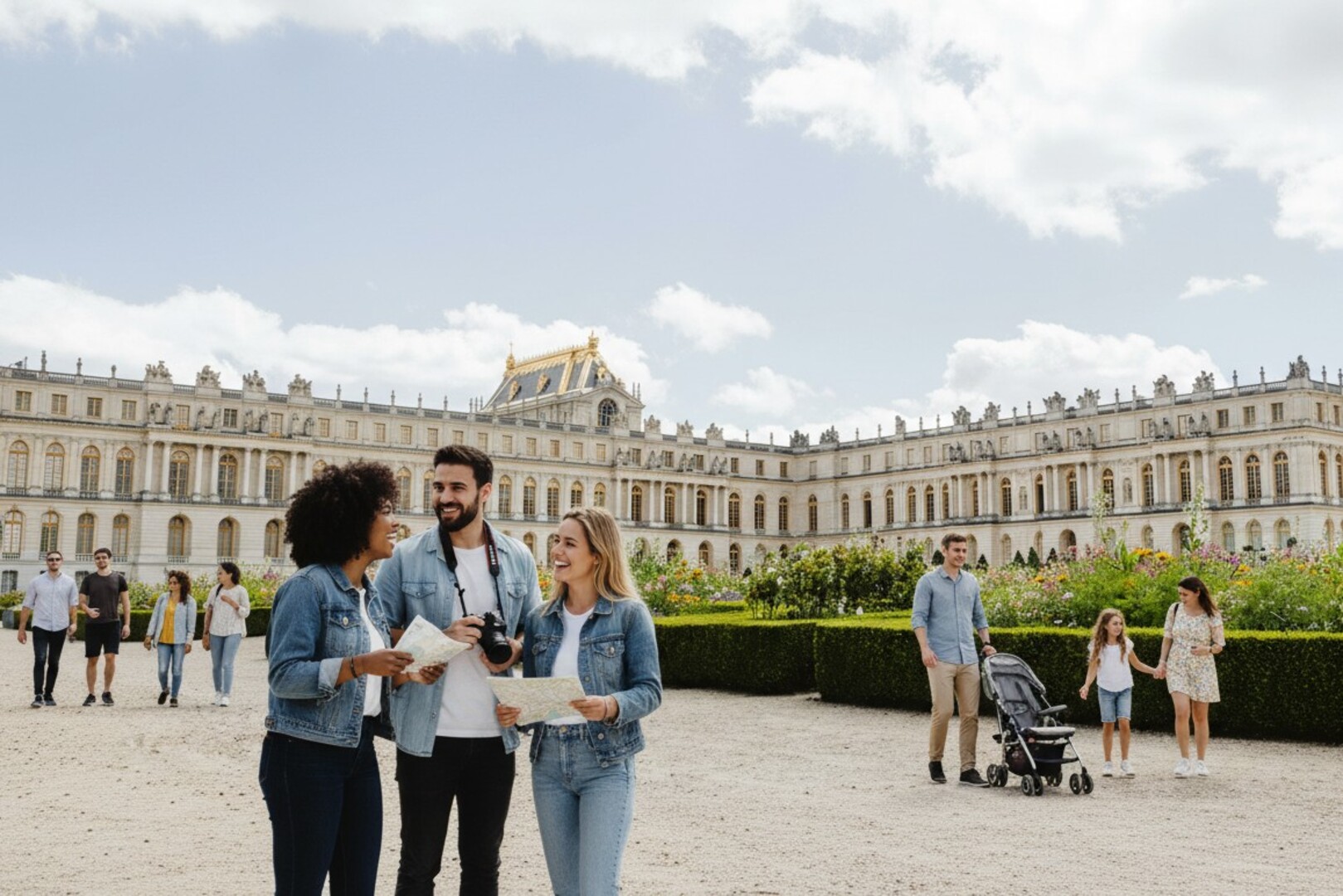
Versailles began as a hunting lodge under Louis XIII, then expanded dramatically under Louis XIV into the political and ceremonial center of France - an architectural statement of royal power that later became a stage for world history, including the signing of the Treaty of Versailles in 1919. Today the estate includes the palace, gardens, park, and the Trianon domains - an experience as much about scale and design as about rooms.
The Louvre is a former royal palace turned public museum during the French Revolution (it opened as a museum in 1793). Its collections span civilizations and centuries, with tens of thousands of works on display at any given time. A Louvre day is less about a single story and more about choosing your own - Renaissance painting, ancient sculpture, Islamic art, or the building’s own layers of history.
Versailles is a monument to power expressed through space. The Louvre is power expressed through collecting - and opening those collections to the public.
The one-day comparison that matters
| What you’re optimizing for | Versailles | The Louvre |
|---|---|---|
| Best feeling | Grandeur, ceremony, fresh air, long sightlines | Masterpieces, variety, discovery, “one more room” energy |
| Pace | Expansive - walking is part of the day | Flexible - short visit can still feel complete |
| Weather-proof? | Partly (gardens shine in good weather) | Yes (ideal on rainy or cold days) |
| Travel time from Paris | About 30 minutes by train, plus the walk from the station | Central Paris, metro-accessible |
| Most memorable moment | Hall of Mirrors + the gardens’ geometry | Mona Lisa crowd, then finding a quiet gallery you love more |
If you pick Versailles: how to make one day feel “enough”
Versailles sits west of Paris (roughly 17 - 18 km), and the day naturally becomes a small departure from the city. Aim to arrive early, because the palace experience is time-based: security, timed entry, and room flow all influence your rhythm. The Hall of Mirrors is the headline, but the power of Versailles is cumulative - room after room, axis after axis, the architecture insisting on scale.
A practical Versailles day
- Morning: Palace highlights (including the Hall of Mirrors and state apartments).
- Midday: Transition to the gardens - choose a focused route rather than trying to “cover everything.”
- Afternoon: One additional layer: the Trianon estate or Marie Antoinette’s domain (pick one if you’re tight on time).
The detail most people miss
- Versailles wasn’t built all at once; it evolved across reigns (major expansions under Louis XIV, later changes under Louis XV and Louis XVI).
- The gardens aren’t “just gardens” - they’re engineered perspective, water, and symbolism on a monumental scale.
- If you only do the palace, you’ll understand the rooms; if you add gardens, you’ll understand the project.
If you pick the Louvre: how to keep it from becoming a blur
The Louvre is enormous, and “seeing it all” is not a reasonable goal - especially in one day. Instead, choose a short list of anchor works and one theme you actually care about. Yes, you’ll pass through famous rooms; but the most satisfying Louvre visits usually hinge on the less obvious moment: realizing you’ve found your own favorite, away from the biggest crowd.
A practical Louvre day
- Start: Pick one wing/zone and commit to it for 60 - 90 minutes.
- Mid-visit: See the “must” (Mona Lisa, Winged Victory, Venus de Milo) only when you’re ready for crowds.
- Finish: Spend your last hour in a quieter department (decorative arts, Near Eastern antiquities, or a painting school you love).
What makes the Louvre different
- It’s a former royal palace, expanded and reworked over centuries, now holding one of the world’s largest museum collections.
- The museum opened to the public in 1793 - its identity is inseparable from the idea of public access to art.
- There is more than one entrance; choosing a less congested entry can change the whole day.
What we’d choose (depending on who you are)
Pick Versailles if you’re…
- Drawn to royal history, palace interiors, and the idea of a “day trip” that feels like leaving Paris.
- Energized by open air: gardens, long walks, fountains, and formal design.
- Traveling with someone who wants one big, cinematic setting rather than many small galleries.
Pick the Louvre if you’re…
- Art-first: you want masterpieces across periods in one place, with the freedom to roam by interest.
- Short on time, avoiding extra transit, or prioritizing a central-Paris itinerary.
- Visiting in poor weather and want a plan that stays mostly indoors.
Planning notes that save the day
- Check closure days: Versailles is typically closed on Mondays; the Louvre is typically closed on Tuesdays.
- Reserve ahead: timed entry is common at both sites; it’s the simplest way to protect your schedule.
- Choose a “yes” and a “no”: one palace wing or one museum department you’ll prioritize, and one you’ll skip guilt-free.
- Wear the right shoes: Versailles especially is a walking day - gardens, park paths, and distances that don’t show up in photos.
If you want help shaping a one-day plan around your pace (and your must-sees), contact our Tour Concierge at [email protected].