Musée d'Orsay: The Definitive Guide to Impressionism's Greatest Home
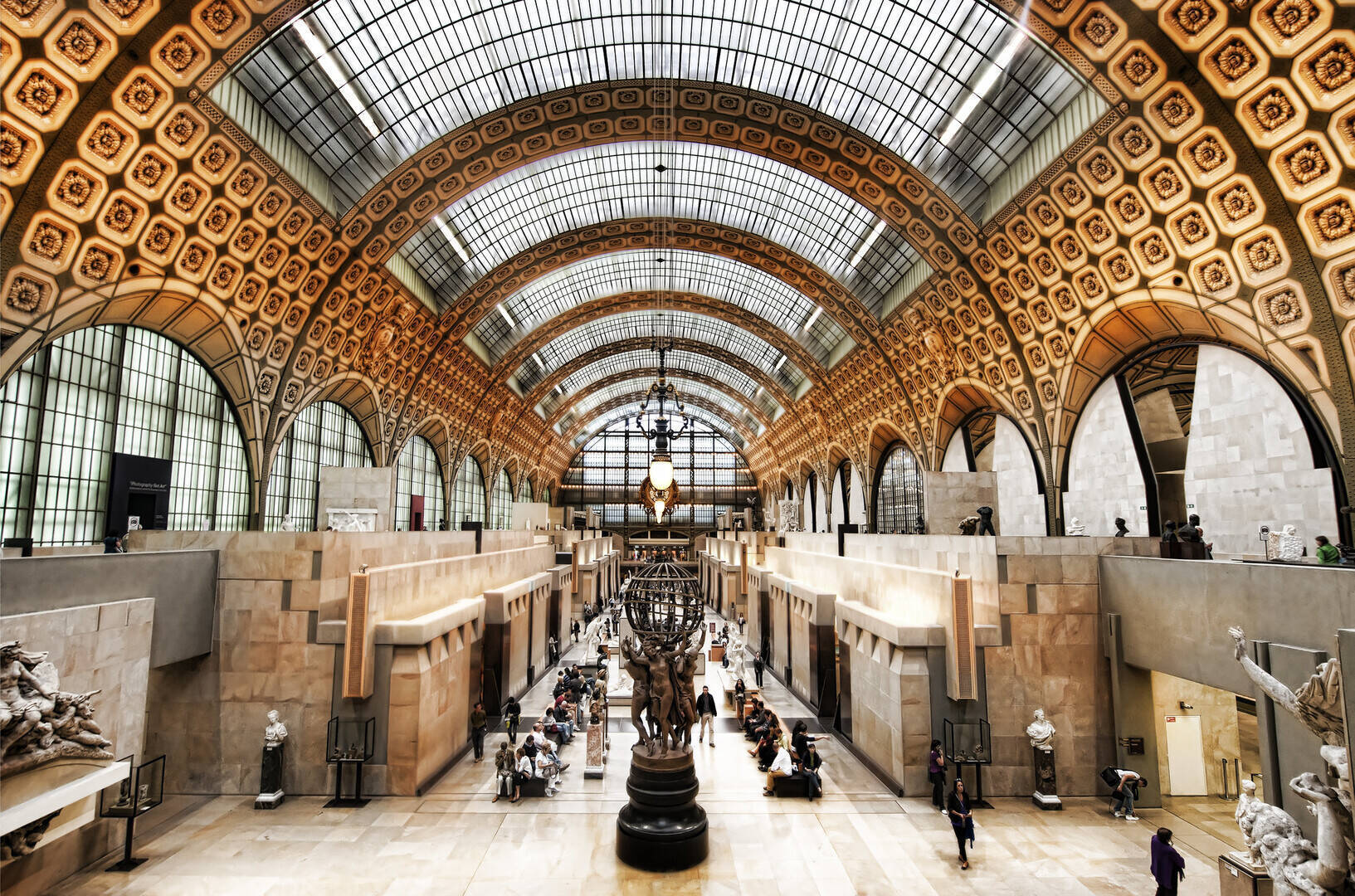
There is a moment that catches almost every first-time visitor off guard: stepping through the entrance of the Musée d'Orsay and looking up to realize that the central nave - enormous, vaulted, flooded with light through glass and ironwork - was once a railway station. The Gare d'Orsay opened in 1900, fell out of use by 1939, and was transformed into a museum in 1986. The building kept its proportions, its clocks, and its light. The art it now holds transformed it into one of the most visited museums in the world.
The Musée d'Orsay covers art from 1848 to 1914 - the period that includes Impressionism, Post-Impressionism, Symbolism, and Art Nouveau. That range means it holds works by Monet, Renoir, Degas, Manet, Cézanne, Van Gogh, Gauguin, Toulouse-Lautrec, Rodin, Courbet, and Klimt - the most concentrated gathering of that era's art in existence. This guide covers the collection, the building, and how to plan your visit well.
The Building: Why the Station Matters
The Gare d'Orsay was designed by architect Victor Laloux for the 1900 Universal Exhibition, built directly opposite the Tuileries Garden on the Left Bank of the Seine. It was one of the first major train stations to use electric traction. By 1939 its platforms were too short for modern trains and it gradually fell into disuse, serving briefly as a prisoner-of-war repatriation center in 1945 and later as a film location.
"Orson Welles filmed The Trial in the Orsay station in 1962. The building's vast empty nave, with light pouring through its arched windows, gave the film its kafkaesque scale."
The conversion to museum, completed in 1986, kept the station's grand central hall as the museum's central axis. Walking along the nave's ground floor, with sculptures displayed in the open space and galleries arrayed on either side and above, remains one of the most distinctive museum experiences in Paris.
Collection Highlights: What Not to Miss
Essential works in the Musée d'Orsay:
- Monet's series paintings (upper floor): Multiple versions of haystacks, Rouen Cathedral, and the Pont d'Argenteuil. The concentration of Monet canvases in a single room gives a sense of his obsessive examination of light that no single painting can convey.
- Renoir - Dance at the Moulin de la Galette (1876): One of the defining images of Impressionism; a Sunday afternoon dance in Montmartre rendered in dappled light. The original is large, luminous, and invariably surrounded by visitors.
- Manet - Olympia (1863) and Le Déjeuner sur l'herbe (1863): Both scandalized Paris in their day. Together they mark the conceptual break between academic painting and the modern movement.
- Van Gogh - The Church at Auvers and Self-Portrait (1889): The Orsay's Van Gogh rooms hold some of his most emotionally intense late works.
- Rodin - The Gates of Hell (ground floor): A monumental bronze work that occupied Rodin for nearly two decades. Individual figures from it - including The Thinker - were later cast as independent sculptures.
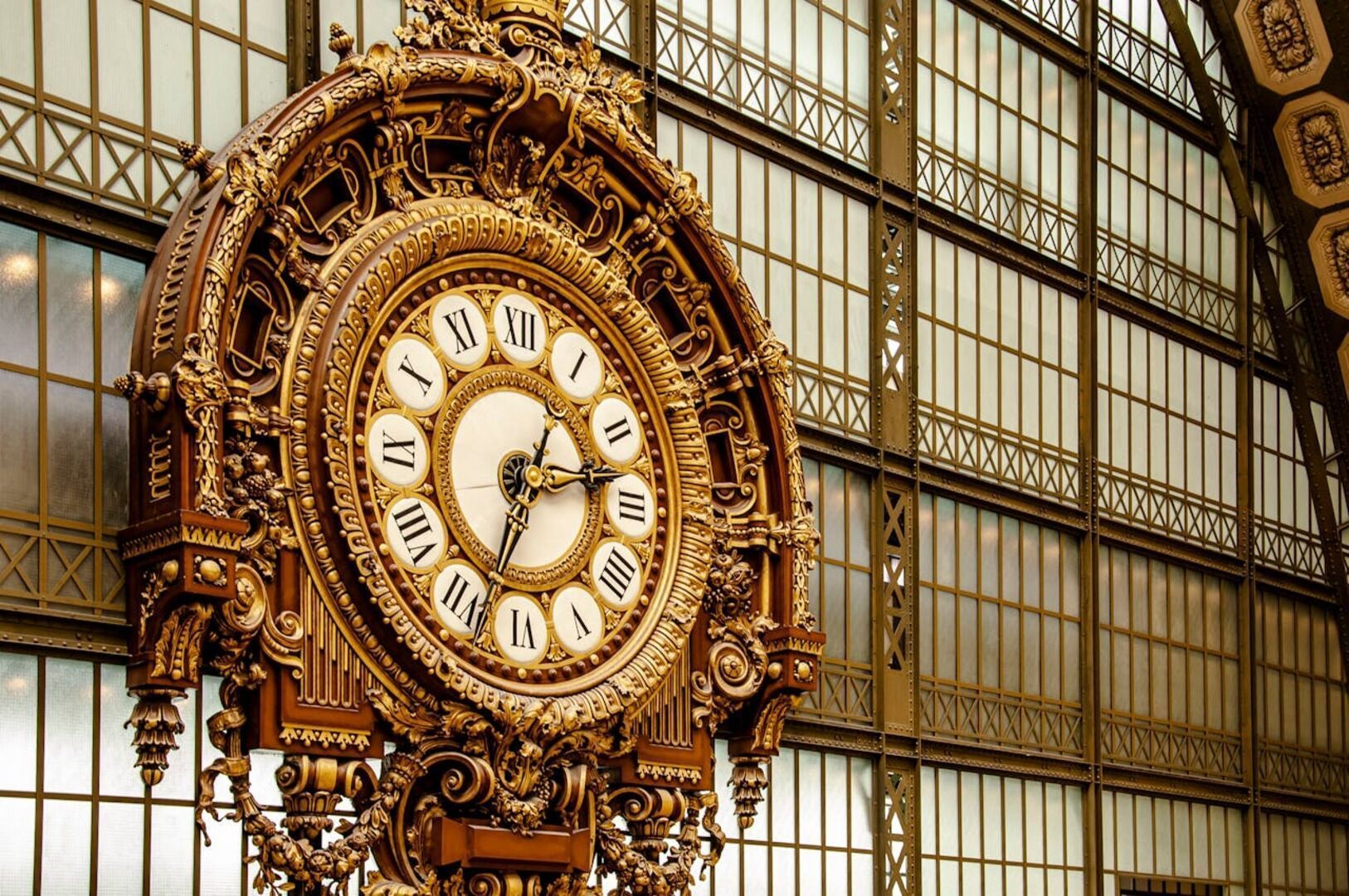
- The clock rooms (upper level): The glass clock faces of the original station now serve as frames for views over the Seine toward Sacré-Cœur. A photograph from this spot is among the most iconic Paris museum images.
Orsay vs. Louvre: Which to Choose?
The Orsay and the Louvre are often framed as an either/or choice when time is limited. They are, in fact, complementary rather than competing: the Louvre's collection ends largely where the Orsay's begins (the mid-19th century), and the two together trace Western art from antiquity through the beginning of the 20th century.
For a single-museum visit focused on art most visitors feel an immediate connection with - Impressionism, the movement that shaped how modern audiences understand painting as an act of perception - the Orsay is often the stronger choice. It is also more navigable in half a day than the Louvre, which requires considered editing to avoid exhaustion. The Louvre Art & Pop Culture Tour provides a curated route through the Louvre's most significant works; pairing it with a self-guided Orsay visit across two days is an effective approach.
How to Plan Your Visit
The Orsay is most crowded on Wednesday and Friday evenings (when it stays open until 9:45pm) and on weekend mornings. Tuesday is one of the quieter days for a daytime visit. The museum is closed on Mondays.
Timed-entry tickets booked online are available and allow you to bypass the general queue at the entrance. For high-season visits (May through September), booking 3 - 5 days in advance is advisable. The Grand Parisian Full-Day Experience can be combined with an Orsay visit - the museum's Left Bank location makes it a natural part of a full Paris day that includes the Seine quays and Tuileries.
Practical visiting notes:
- Closed Mondays; open Tuesday - Sunday, 9:30am - 6pm (9:45pm on Thursdays).
- Under-18s and EU residents under 26 have free entry.
- The ground floor café and upper-level restaurant are both well-regarded; the restaurant (behind the clock face) requires a reservation.
- Allow 2.5 - 3 hours for a focused visit; 4+ hours for a thorough one.
- Audio guides are available at the entrance; the Orsay's own app includes guided thematic routes.
Tips for Getting the Most from the Orsay
- Start on the top floor: The Impressionist galleries are on the upper level. Starting there - when your energy is highest - and working downward through the collection is a more effective approach than the default ground-floor entry route.
- Spend time with the clock: The giant clock rooms on the upper level, overlooking the Seine through the station's original clock faces, are among the most photographed spaces in all of Paris. They are also genuinely beautiful in afternoon light.
- Don't overlook the sculpture hall: The central nave's sculpture displays - including Rodin, Carpeaux, and Barrias - are easy to walk past quickly. They repay slower attention.
- Check for temporary exhibitions: The Orsay runs major temporary exhibitions throughout the year that often complement the permanent collection. Check the programme before your visit.
- Visit on a Thursday evening: The Thursday late opening (until 9:45pm) typically draws fewer crowds than daytime, and the museum's interior in evening light has a distinctive quality.
For help building a Paris museum itinerary, including the Orsay alongside other guided experiences, contact our Tour Concierge at [email protected].