Central Park: The Complete Visitor's Guide
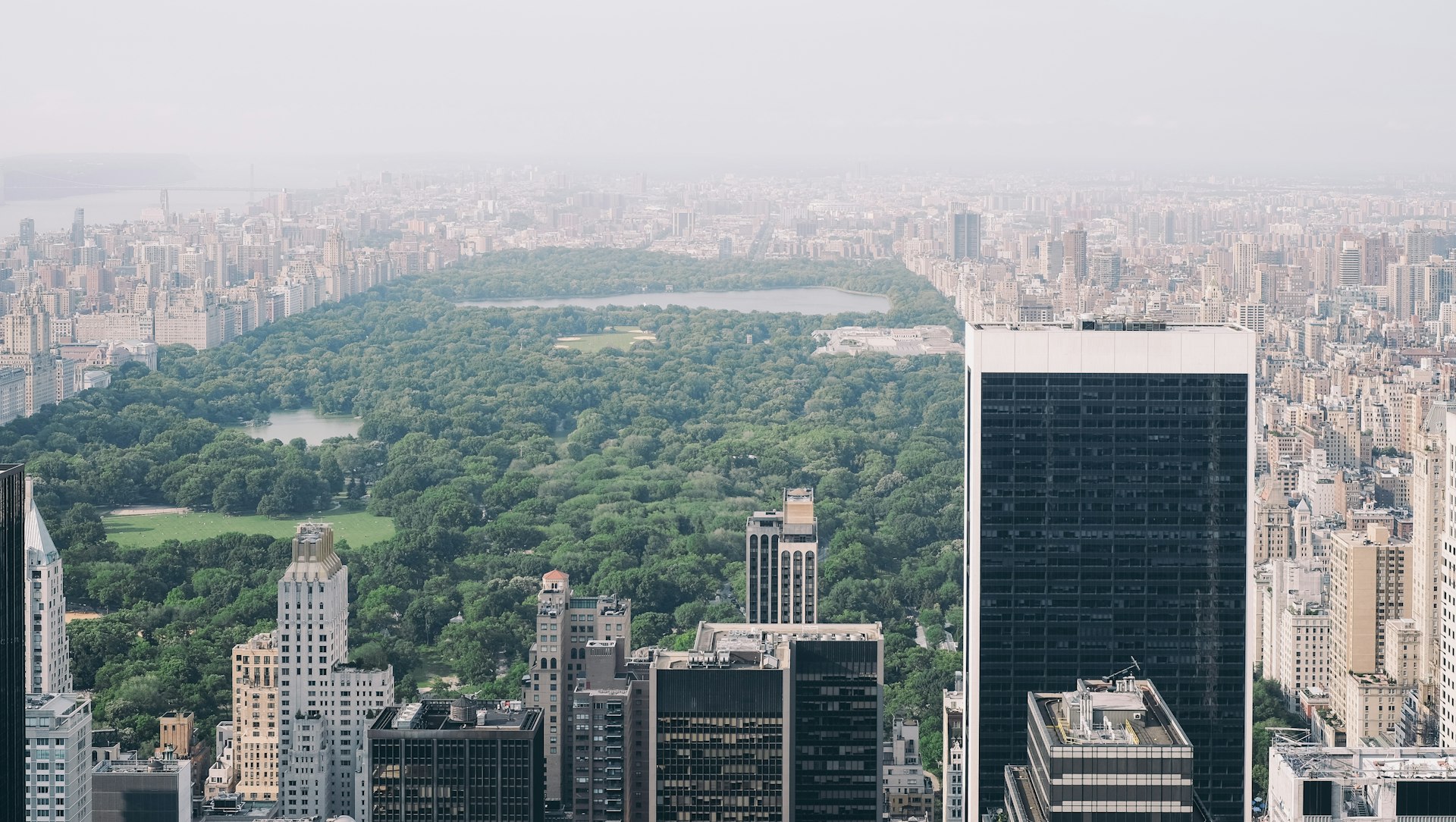
Central Park is 843 acres of designed landscape dropped into the middle of the world's densest skyline - a rectangle roughly 2.5 miles long and half a mile wide, bordered by four of Manhattan's most storied avenues. It's easy to wander in through the nearest gate and see almost nothing beyond a lawn and some trees. It's also easy, with a little orientation, to spend a full day moving between a Gothic-arched terrace, a lake full of rowboats, and a rink that turns into an ice sheet every winter, and still leave with more to come back for.
Getting Oriented: A Park Built to Be Walked
Central Park opened its first sections in 1858, the winning design of architects Frederick Law Olmsted and Calvert Vaux in a public competition to turn undeveloped marshland and rock outcrops into the city's first great public green space. Their plan, titled the "Greensward Plan," deliberately separated pedestrian paths, bridle trails, and carriage roads onto different levels so none would cross - a detail you can still feel today in the park's tucked-away underpasses and looping drives.
There's no single "front door." Entrances are spaced along all four sides, and most visitors do best picking one near where they're staying rather than trying to see the whole park in one pass. From the south, Grand Army Plaza at 5th Avenue and 59th Street puts you closest to the Pond and the Zoo; from the west, entrances near Columbus Circle and around 72nd Street lead straight toward Strawberry Fields and the Lake. The park is walkable end to end in about an hour if you don't stop - almost nobody doesn't stop.
Bethesda Terrace and the Lake
If Central Park has a single center of gravity, it's Bethesda Terrace, a grand sandstone plaza just north of the 72nd Street crossing. Descend the stairs from the Mall and you'll find the Angel of the Waters fountain, unveiled in 1873 and one of the few statues in the original park design depicting a woman - a nurse's tribute to the Croton Aqueduct that first brought clean water to New York. The arcade beneath the terrace, tiled with over 15,000 encaustic tiles restored after decades of decay, is worth ducking into even on a hot day.
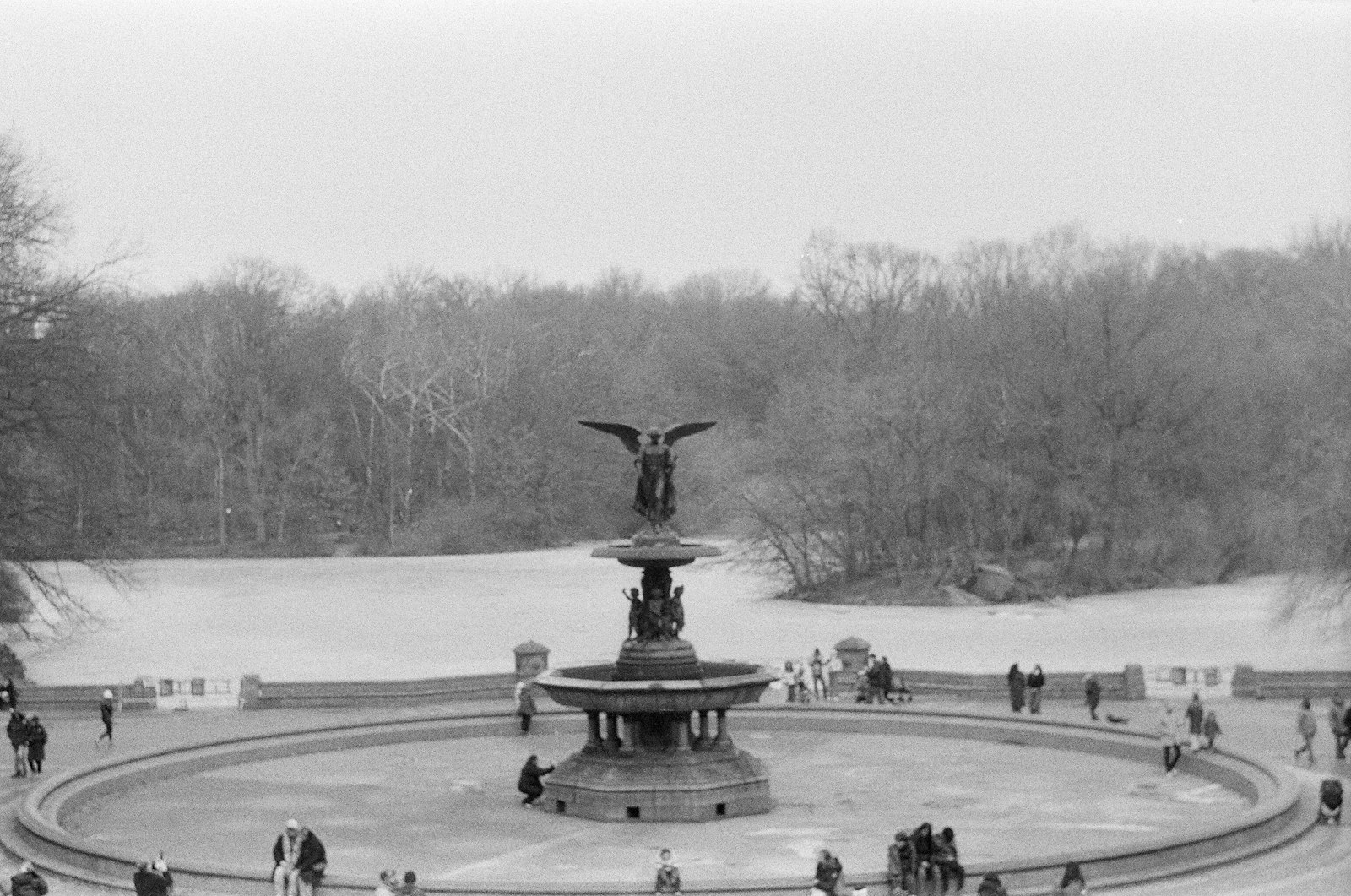
Just beyond the terrace, the Lake spreads out toward Bow Bridge, the cast-iron footbridge that's appeared in more films and engagement photos than almost any other spot in the park. Rowboat rentals are available from the Loeb Boathouse on the Lake's east side from spring through fall - no reservation required, just show up and rent by the hour, and budget extra time if you're visiting on a weekend afternoon when the line can run long.
The Mall, Strawberry Fields & Sheep Meadow
The Mall is the park's one straight line - a quarter-mile promenade lined with American elms whose branches meet overhead to form a cathedral-like canopy, among the last stands of American elm left in North America after Dutch elm disease wiped out most others. Street performers and chess players tend to cluster at its southern end, near the Naumburg Bandshell.
West of the Mall, Strawberry Fields is a quieter, tear-shaped landscape dedicated to John Lennon, who lived across the street at the Dakota until his death in 1980; the mosaic reading "Imagine," donated by the city of Naples, marks the spot where visitors still leave flowers. Further south, Sheep Meadow's fifteen open acres are exactly what they sound like - real sheep grazed here until 1934 - and remain one of the few spots in the park where lying down on the grass with a book is the entire point.
Winter at the Wollman Rink
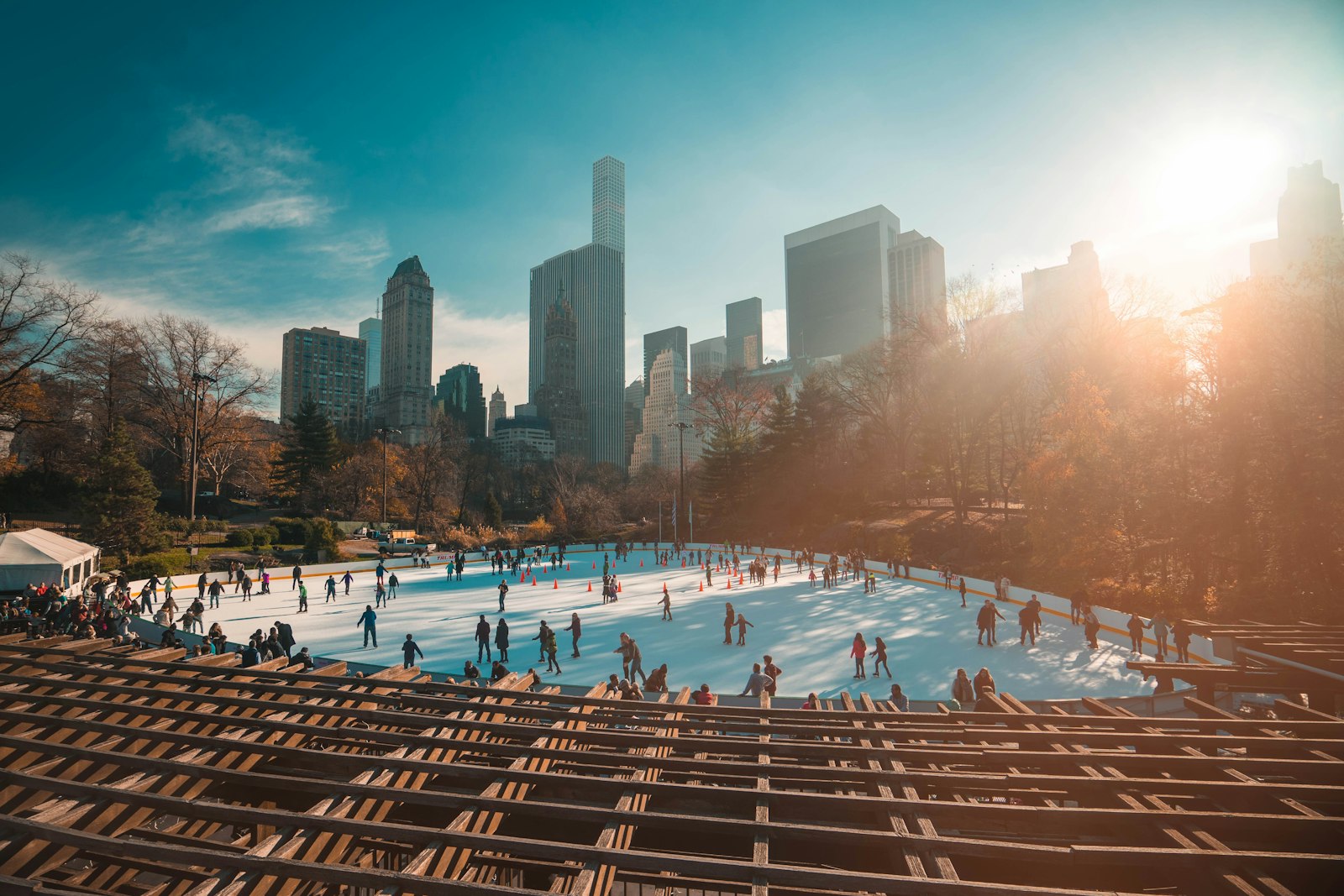
Come the colder months, the park's identity shifts. The Wollman Rink, tucked into the southeast corner near 6th Avenue, opens for ice skating from late fall through early spring with one of the best backdrops of any outdoor rink in the city - skyscrapers on three sides and the park's own tree line on the fourth. Skate rental is available on site, and lines are shortest on weekday mornings; by golden hour on a clear winter weekend, the wait can stretch well past an hour.
Central Park at a Glance:
- Size: 843 acres, about 2.5 miles long
- Opened: 1858, designed by Olmsted and Vaux
- Admission: Free, always open to the public
- Best free view: The Pond near Grand Army Plaza, or Belvedere Castle's terrace
- Winter highlight: Wollman Rink ice skating, open roughly late Oct - Mar
Planning a New York itinerary around the park? Email our Tour Concierge at [email protected] and we'll help you build a route from Bethesda Terrace to the rest of the city.